Tell us about the job
Takes about a minute. No obligation.

Sizing a heat pump for Cook County starts with understanding what the equipment will actually run against. 135 severe weather events were recorded in Cook County, Minnesota between 2015 and 2024. At that rate, severe weather is a regular part of operating life here, and a contractor who treats it as a rare variable will undersize refrigerant lines, underspec electrical connections, or choose an outdoor unit whose housing and components are built for gentler conditions. The install has to account for the real load from the start, because reworking those decisions later costs more than getting them right the first time.
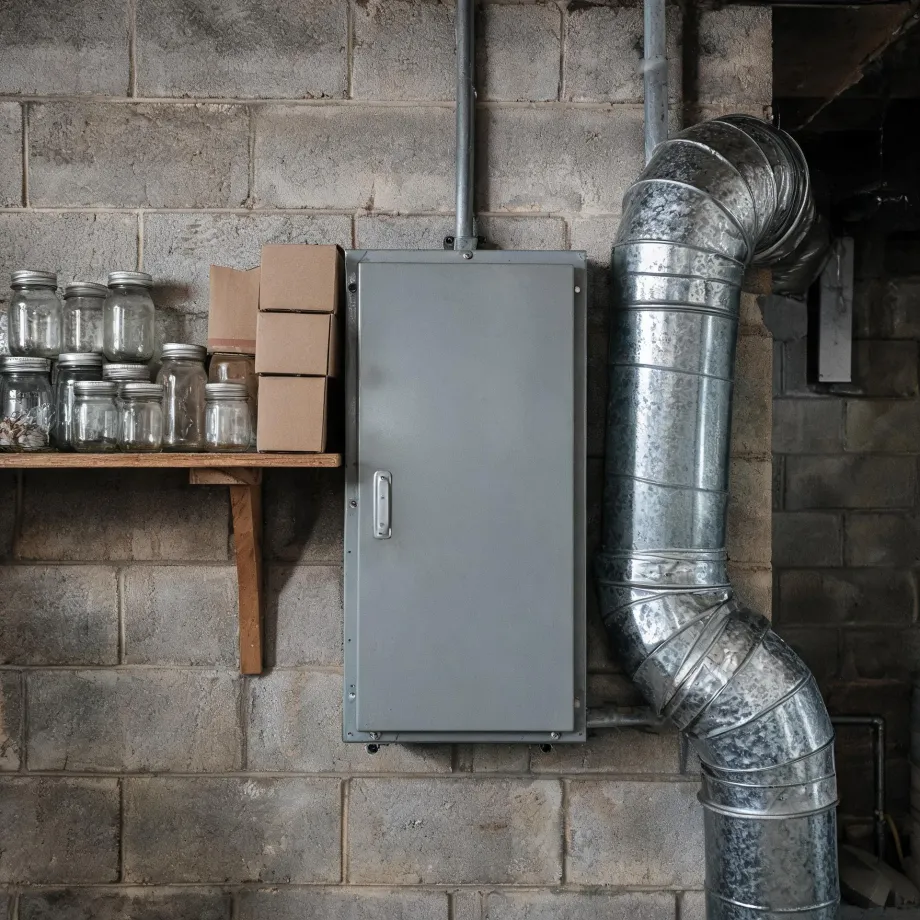
Ductwork laid down for a furnace and central air setup carries assumptions about airflow that a heat pump does not share. Half the homes in Cook County, Minnesota were built in 1988 or earlier (2020-2024 ACS 5-year). A heat pump moves air at lower temperatures and higher volumes than the equipment that ductwork was originally designed around, which means what a contractor finds behind the walls decides whether the existing runs stay or get reworked. The electrical service is the second question: the panel and the wiring that fed earlier equipment set the ceiling on what a new unit can draw. Both have to be assessed before any other part of the job is priced.
What a Heat Pump Installation Puts in Your Home
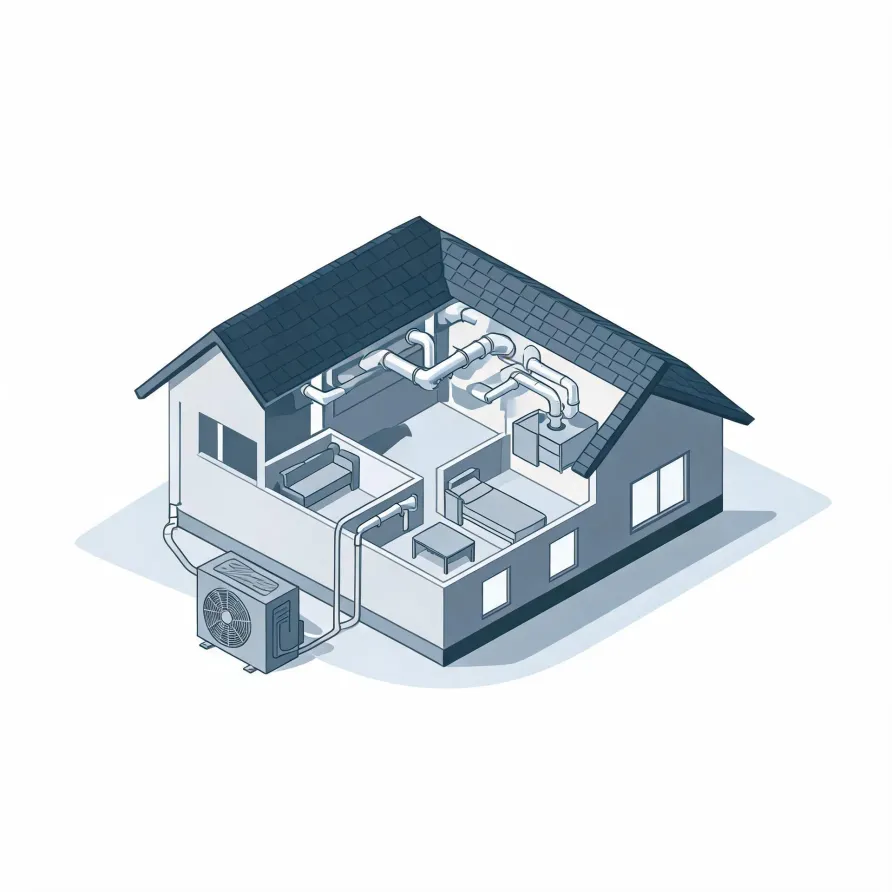
The outdoor unit sits on a pad beside the house and holds the compressor and the heat exchange coil that do the core work of the system. Inside, the air handler mounts in a utility space, a closet, or an attic and moves conditioned air through the home. Together these two units are what a new installation places.
A refrigerant line set runs between the outdoor unit and the air handler, connecting the two halves of the system through the wall or floor. A thermostat goes on an interior wall where it reads the home's temperature and tells the system when to run. The disconnect box mounts near the outdoor unit and gives a contractor a safe local shutoff point.
The drawing shows the general layout of a heat pump system, and a licensed contractor determines exactly how each piece is positioned and configured for this particular house.
Get matched in Cook CountyCook County, Minnesota, by the numbers
135 severe weather events were recorded in Cook County, Minnesota between 2015 and 2024.
NOAA National Centers for Environmental Information, Storm Events Database, bulk CSV export, events 2015-01-01 through 2024-12-31.Half the homes in Cook County, Minnesota were built in 1988 or earlier (2020-2024 ACS 5-year).
U.S. Census Bureau, 2020-2024 American Community Survey 5-Year EstimatesCook County, Minnesota holds 6,079 housing units (2020-2024 ACS 5-year).
U.S. Census Bureau, 2020-2024 American Community Survey 5-Year EstimatesOwners occupy 77.7% of the occupied homes in Cook County, Minnesota (2020-2024 ACS 5-year).
U.S. Census Bureau, 2020-2024 American Community Survey 5-Year EstimatesHeat Pump Installation Rules and Codes for Cook County, Minnesota2 sourced standards and regulations
Licensing and Legal Requirements in Cook County, Minnesota
Minnesota defines a mechanical contractor as a business that installs, repairs or maintains heating, ventilating, cooling or refrigeration systems — the definition that carries the exemption from the residential contractor licence.
Minnesota's residential contractor licence does not reach HVAC work: the licensing section carries its own exemption list, and a mechanical contractor is exempt from the licence requirement by name.
Severe Weather Events in Cook County
Weather in Cook County puts real demands on heating and cooling equipment. A heat pump sized and installed for local conditions handles those demands better than one spec'd for somewhere else.
135 severe weather events, 2015–2024. Source: NOAA National Centers for Environmental Information, Storm Events Database.