Tell us about the job
Takes about a minute. No obligation.
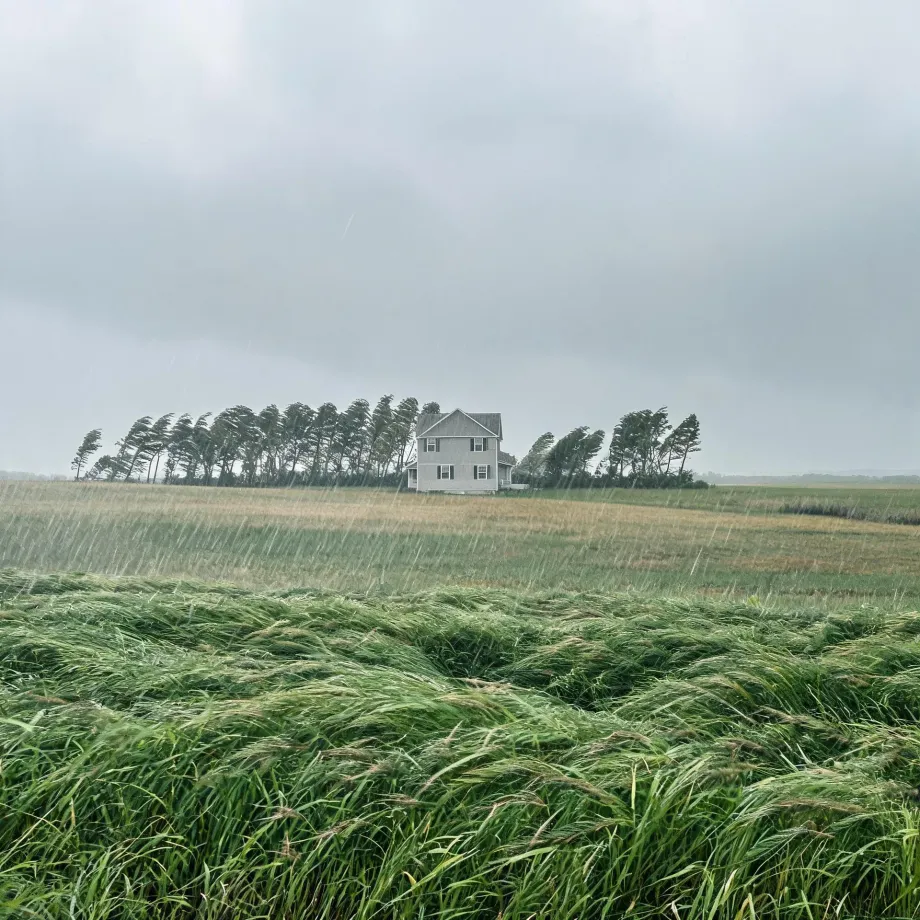
A contractor diagnosing a heat pump repair in Faribault County will want to know how old the system is and whether it has been serviced regularly, because those two things explain most of what goes wrong here. 58 severe weather events were recorded in Faribault County, Minnesota between 2015 and 2024. Severe weather in this area is an occasional event rather than a standing condition, so worn capacitors, degraded refrigerant charge, and compressor fatigue trace back to equipment age and installation quality far more often than to storm load. A contractor who skips that assessment and reaches for weather as the explanation is skipping the likelier answer.
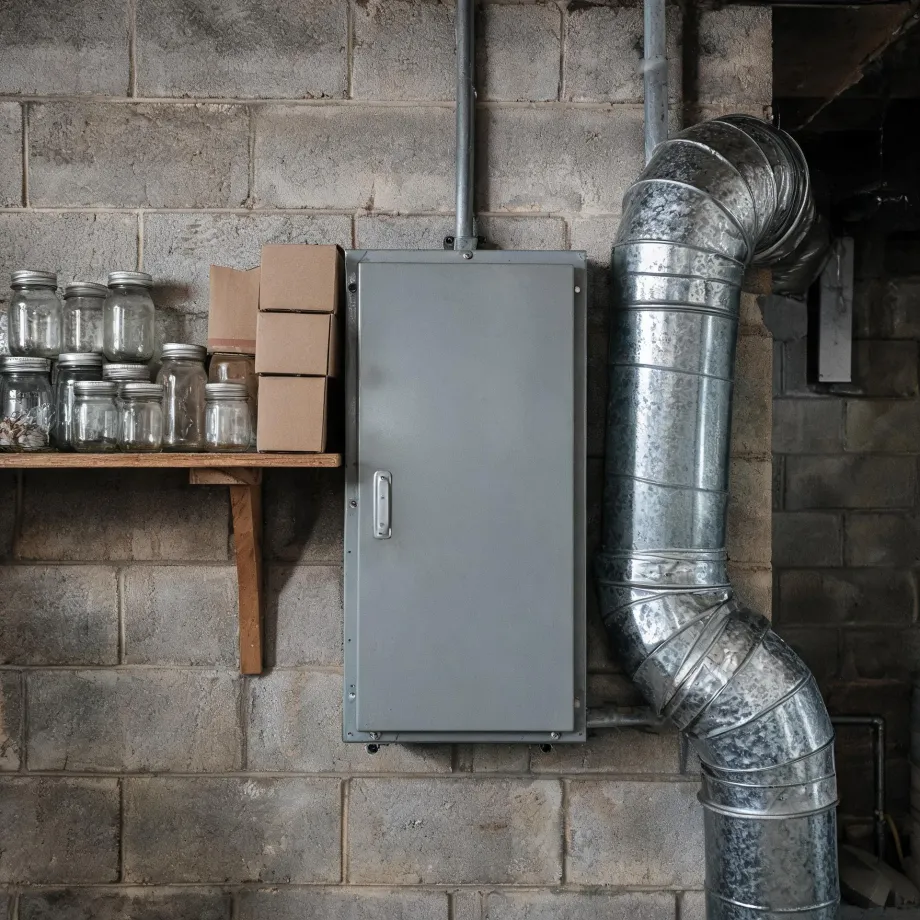
What a heat pump in Faribault County has been working against matters as much as which component has failed. Half the homes in Faribault County, Minnesota were built in 1952 or earlier (2020-2024 ACS 5-year). A system installed in a house that old has been conditioning air through walls, attic layers, and crawl spaces that were built long before heat pumps existed, and those conditions place a specific load on the equipment over time. When a contractor opens the unit, what they find in the compressor, the reversing valve, and the refrigerant circuit reflects that accumulated strain. The part that failed and the part that is about to fail are not always the same part.
The Parts of a Heat Pump a Contractor Checks First
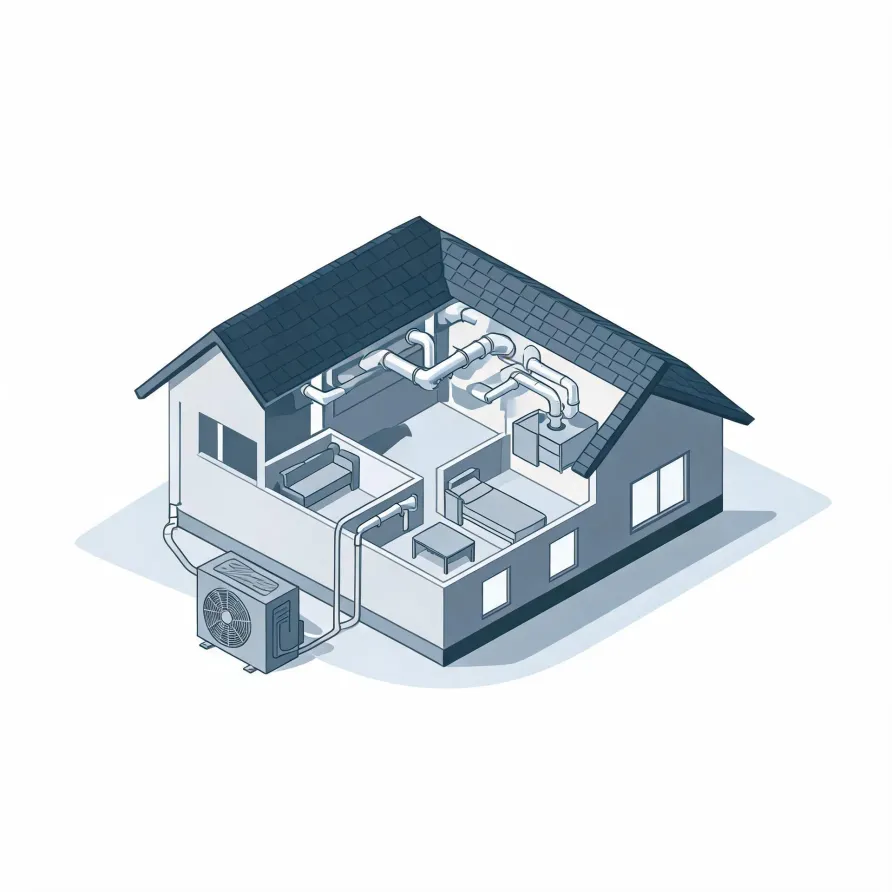
The outdoor unit sits on a pad beside the house and holds the compressor and one set of coils. The compressor is where most repair calls begin. When it runs poorly or not at all, the whole system stops moving heat in either direction. The coils in that same cabinet can collect debris or develop leaks, and either condition shows up as a system that struggles to keep up.
Inside the house, the air handler holds a second set of coils and the blower that pushes conditioned air through the home. The expansion valve sits between the two coil sets and controls refrigerant flow. A contractor also checks the refrigerant lines that run between the units and the reversing valve, which is the part that lets a heat pump heat in winter and cool in summer.
The drawing shows the general layout of a heat pump system, and a licensed contractor determines what applies to the specific equipment and configuration in your home.
Get matched in Faribault CountyFaribault County, by the record
58 severe weather events were recorded in Faribault County, Minnesota between 2015 and 2024.
NOAA National Centers for Environmental Information, Storm Events Database, bulk CSV export, events 2015-01-01 through 2024-12-31.Half the homes in Faribault County, Minnesota were built in 1952 or earlier (2020-2024 ACS 5-year).
U.S. Census Bureau, 2020-2024 American Community Survey 5-Year EstimatesFaribault County, Minnesota holds 6,897 housing units (2020-2024 ACS 5-year).
U.S. Census Bureau, 2020-2024 American Community Survey 5-Year EstimatesOwners occupy 79.2% of the occupied homes in Faribault County, Minnesota (2020-2024 ACS 5-year).
U.S. Census Bureau, 2020-2024 American Community Survey 5-Year EstimatesCodes & Standards Behind Heat Pump Repair in Faribault County, Minnesota2 sourced rules & standards
Licensing and Legal Requirements in Faribault County, Minnesota
Minnesota defines a mechanical contractor as a business that installs, repairs or maintains heating, ventilating, cooling or refrigeration systems — the definition that carries the exemption from the residential contractor licence.
Minnesota's residential contractor licence does not reach HVAC work: the licensing section carries its own exemption list, and a mechanical contractor is exempt from the licence requirement by name.
Severe Weather Events in Faribault County
Extreme weather puts real stress on heat pump systems, forcing them to run harder and longer than ordinary conditions demand. How much of that pressure local equipment absorbs is a Faribault County question, and it shapes what repair work looks like here.
58 severe weather events, 2015–2024. Source: NOAA National Centers for Environmental Information, Storm Events Database.