Tell us about the job
Takes about a minute. No obligation.
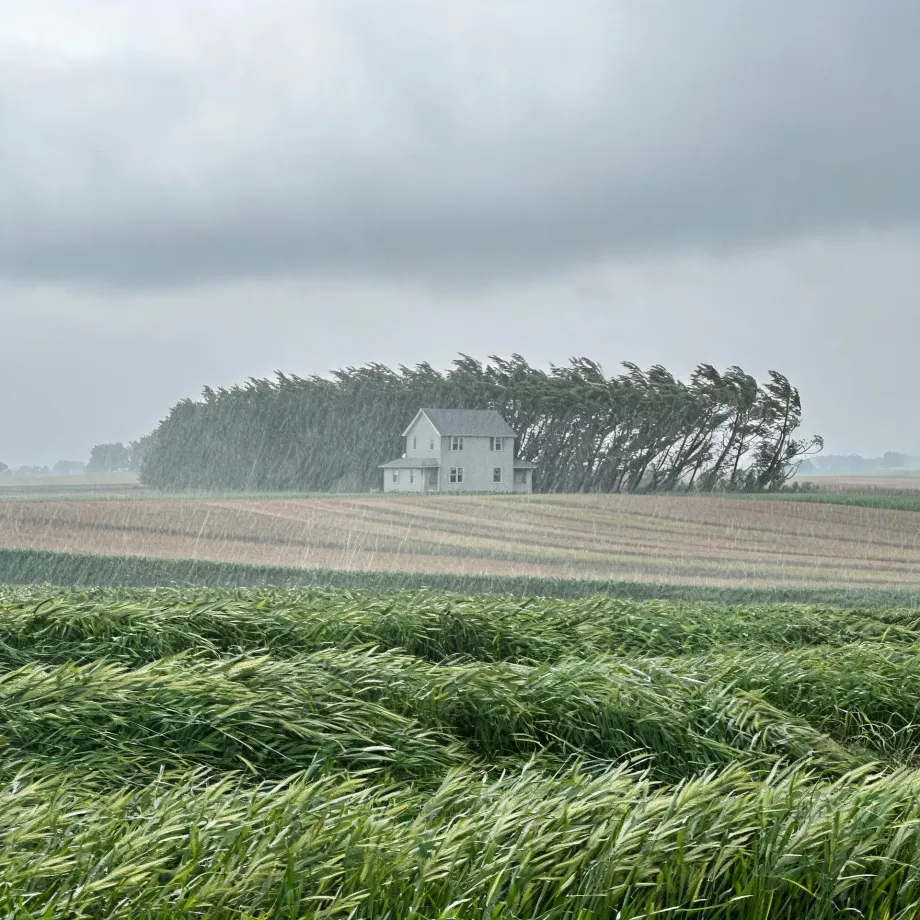
A heat pump repair in this area starts with what the system has actually been through, and the weather load here is moderate enough that it seldom accounts for a failed component on its own. 91 severe weather events were recorded in Yellow Medicine County, Minnesota between 2015 and 2024. At that rate, severe weather is a real but occasional presence, and a contractor who opens a compressor or pulls a reversing valve is more likely tracing years of wear or a poor original install than storm-related stress. Age and maintenance history are what drive most of the failures a technician finds here.
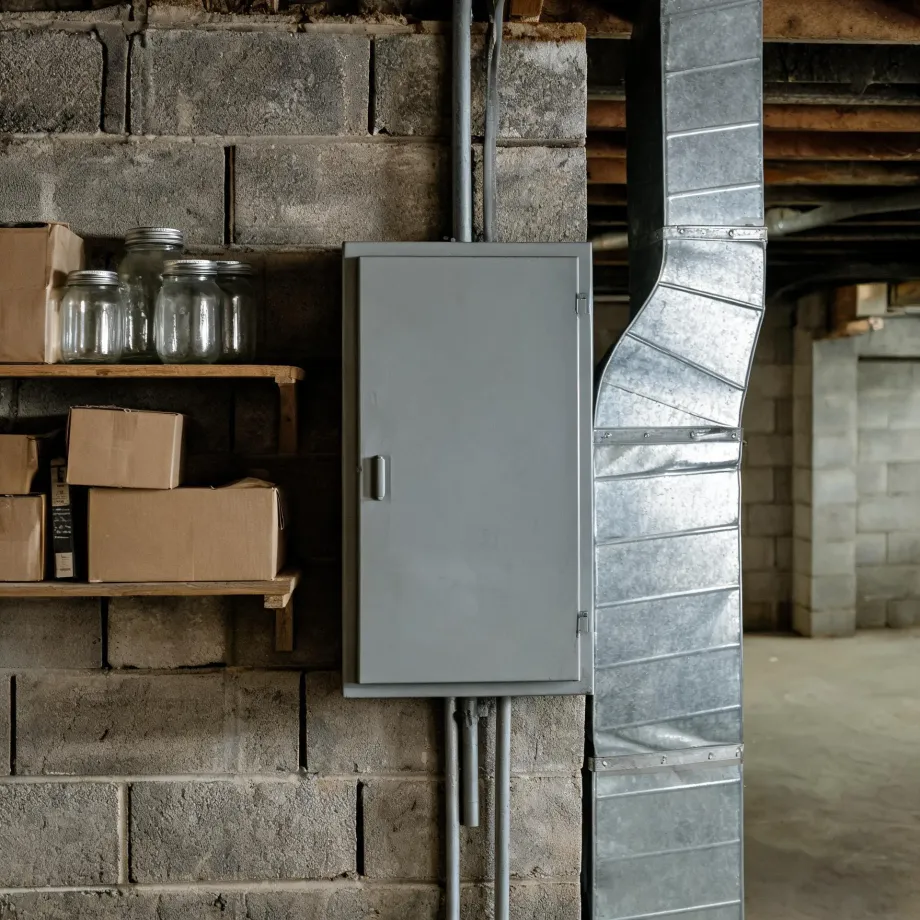
Half the homes in Yellow Medicine County, Minnesota were built in 1958 or earlier (2020-2024 ACS 5-year). A house built that long ago has almost certainly seen its mechanical systems changed more than once, which means the heat pump a contractor opens today was likely retrofitted into a structure built for something else entirely. What that produces, at the repair level, is a system whose internal components may belong to a product line that has since been discontinued or revised. The contractor has to confirm parts availability before a repair scope makes sense, because a fix that requires a component no longer in production becomes a different conversation than one that does not.
The Parts of a Heat Pump a Contractor Checks First
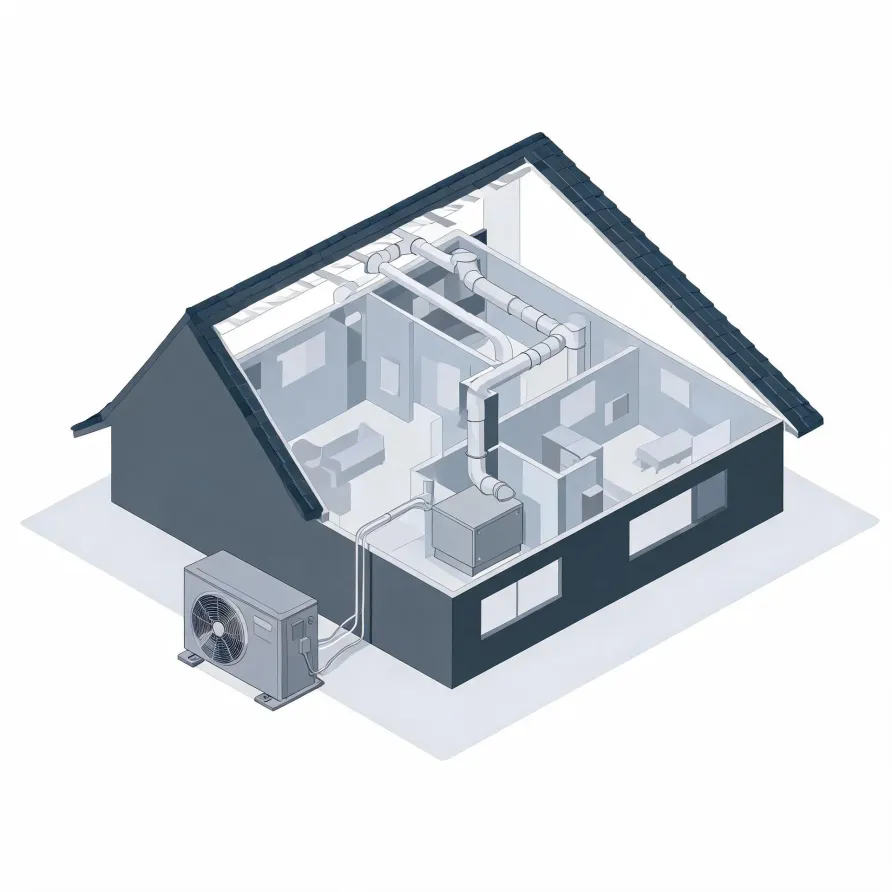
The outdoor unit sits on a pad beside the house and holds the compressor, which is what a contractor reaches for first when a heat pump stops moving heat the way it should. The coil wrapped around it and the fan above it both get scrutinized closely, since a bent fin, a frozen coil, or a seized fan motor each produces symptoms that look alike from inside the house.
The indoor air handler mounts in a utility space, closet, or attic and contains its own coil, a blower, and the filter that sits upstream of both. The refrigerant lines connecting the two units and the reversing valve inside the outdoor cabinet are also common sources of trouble, because a slow leak or a stuck valve will rob the system of heating and cooling capacity in ways that show up long before the compressor fails.
The drawing shows the general layout of a heat pump system, and a licensed contractor determines which components and conditions apply to your specific house.
Get matched in Yellow Medicine CountyYellow Medicine County, by the numbers
91 severe weather events were recorded in Yellow Medicine County, Minnesota between 2015 and 2024.
NOAA National Centers for Environmental Information, Storm Events Database, bulk CSV export, events 2015-01-01 through 2024-12-31.Half the homes in Yellow Medicine County, Minnesota were built in 1958 or earlier (2020-2024 ACS 5-year).
U.S. Census Bureau, 2020-2024 American Community Survey 5-Year EstimatesYellow Medicine County, Minnesota holds 4,488 housing units (2020-2024 ACS 5-year).
U.S. Census Bureau, 2020-2024 American Community Survey 5-Year EstimatesOwners occupy 84.0% of the occupied homes in Yellow Medicine County, Minnesota (2020-2024 ACS 5-year).
U.S. Census Bureau, 2020-2024 American Community Survey 5-Year EstimatesCodes & Standards Governing Heat Pump Repair in Yellow Medicine County, Minnesota2 sourced rules & standards
Licensing and Legal Requirements in Yellow Medicine County, Minnesota
Minnesota defines a mechanical contractor as a business that installs, repairs or maintains heating, ventilating, cooling or refrigeration systems — the definition that carries the exemption from the residential contractor licence.
Minnesota's residential contractor licence does not reach HVAC work: the licensing section carries its own exemption list, and a mechanical contractor is exempt from the licence requirement by name.
Severe Weather Events in Yellow Medicine County
Heat pumps work against whatever the outside air throws at them, and in Yellow Medicine County that pressure is real and local. Every weather event logged here represents a load the equipment had to handle, which is why repair demand in this area follows the sky.
91 severe weather events, 2015–2024. Source: NOAA National Centers for Environmental Information, Storm Events Database.