Tell us about the job
Takes about a minute. No obligation.

A heat pump repair quote here carries a question most homeowners do not expect: which failures came from age and which came from the system running hard against what this county actually throws at equipment. 132 severe weather events were recorded in Kittson County, Minnesota between 2015 and 2024. At that rate, contractors working heat pump repairs in this area find components that have been stressed repeatedly, and the difference between a worn contactor and a cracked compressor scroll is not the same bill. A contractor who skips that distinction will either underprice the repair or replace a part that was not the root problem.
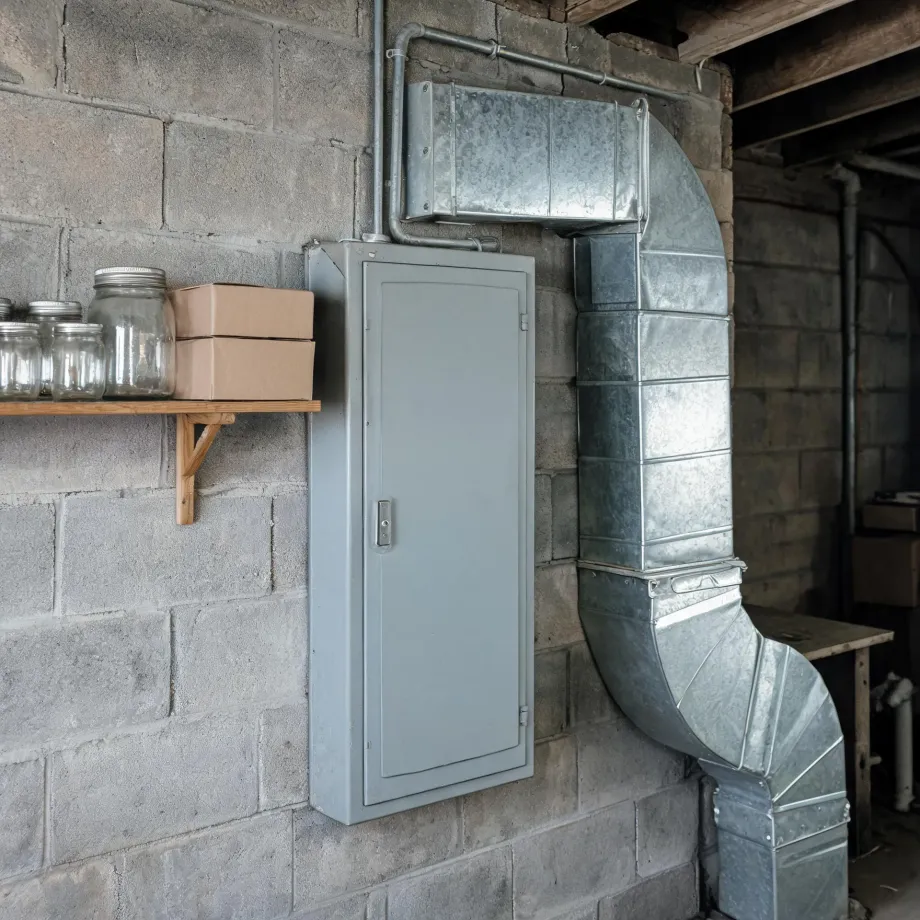
Ductwork laid down for one kind of system and electrical runs sized for another tell a contractor less about the heat pump than what comes off the unit once it is open. Half the homes in Kittson County, Minnesota were built in 1967 or earlier (2020-2024 ACS 5-year). A heat pump installed into stock that old is drawing on components the original builders never anticipated, and the refrigerant lines, contactors, and control boards that keep it running may belong to a production run that suppliers have since discontinued. When a part is no longer stocked, the contractor prices alternatives or sources from secondary markets, and that decision shapes the repair bill more than the labor does.
The Parts of a Heat Pump a Contractor Checks First
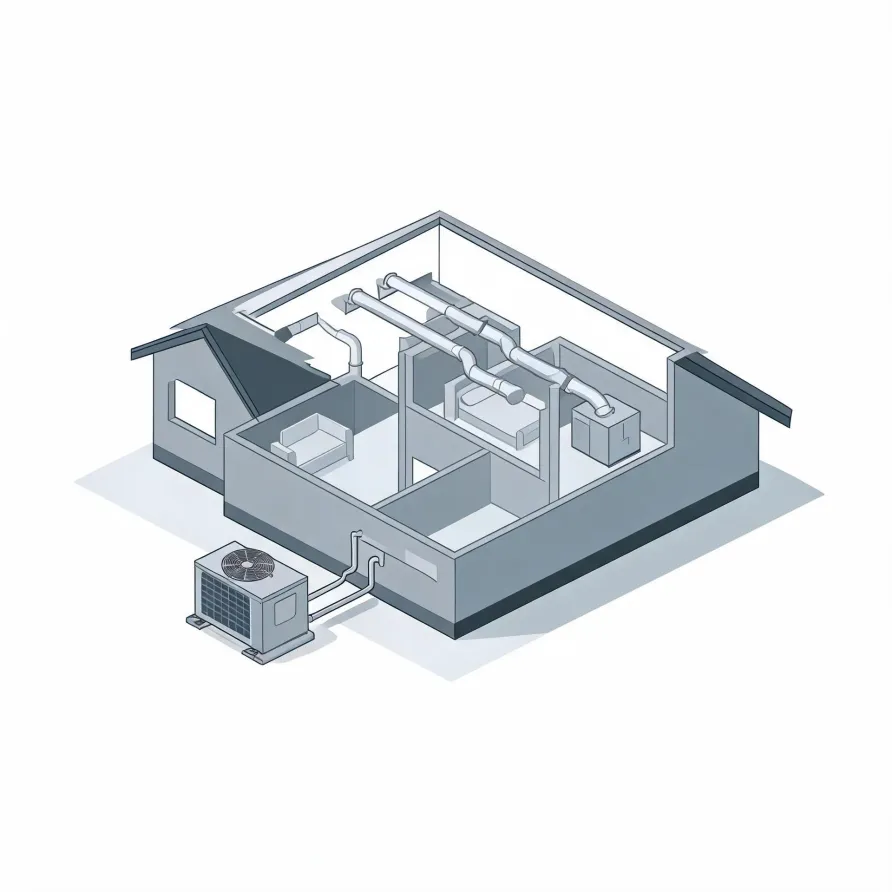
The outdoor unit sits on a pad beside the house and holds the compressor and condenser coil, the two components that do the heaviest work. When a heat pump stops heating or cooling, the compressor and that coil are where a contractor starts. A failed compressor, a refrigerant leak at the coil, or a seized fan motor in that cabinet accounts for a large share of repair calls.
Inside the house, the air handler hangs in a closet, attic, or mechanical room and pushes conditioned air through the home. It contains an evaporator coil, a blower motor, and an expansion valve, any of which can be the source of reduced airflow, icing, or erratic temperatures. A reversing valve, which sits inside the outdoor unit, is the part that lets a heat pump run in both directions, and a fault there produces symptoms that can look like compressor trouble.
The drawing shows a typical heat pump layout, and a licensed contractor determines which components apply to the specific system and house in question.
Get matched in Kittson CountyKittson County, by the record
132 severe weather events were recorded in Kittson County, Minnesota between 2015 and 2024.
NOAA National Centers for Environmental Information, Storm Events Database, bulk CSV export, events 2015-01-01 through 2024-12-31.Half the homes in Kittson County, Minnesota were built in 1967 or earlier (2020-2024 ACS 5-year).
U.S. Census Bureau, 2020-2024 American Community Survey 5-Year EstimatesKittson County, Minnesota holds 2,228 housing units (2020-2024 ACS 5-year).
U.S. Census Bureau, 2020-2024 American Community Survey 5-Year EstimatesOwners occupy 82.9% of the occupied homes in Kittson County, Minnesota (2020-2024 ACS 5-year).
U.S. Census Bureau, 2020-2024 American Community Survey 5-Year EstimatesCodes & Standards Governing Heat Pump Repair in Kittson County, Minnesota2 sourced rules & standards
Licensing and Legal Requirements in Kittson County, Minnesota
Minnesota defines a mechanical contractor as a business that installs, repairs or maintains heating, ventilating, cooling or refrigeration systems — the definition that carries the exemption from the residential contractor licence.
Minnesota's residential contractor licence does not reach HVAC work: the licensing section carries its own exemption list, and a mechanical contractor is exempt from the licence requirement by name.
Severe Weather Events in Kittson County
Kittson County weather puts real stress on heat pump systems, which have to work harder and more often when conditions are extreme. How much stress a system carries over the years shapes what repairs it needs and when.
132 severe weather events, 2015–2024. Source: NOAA National Centers for Environmental Information, Storm Events Database.