Tell us about the job
Takes about a minute. No obligation.

A heat pump in this area has been doing its job against a weather record that sits somewhere between occasional stress and constant battering. 83 severe weather events were recorded in Meeker County, Minnesota between 2015 and 2024. At that rate, the load is real enough that refrigerant lines, capacitors, and contactor points deserve inspection for wear that severe weather contributes to over time. A contractor working a repair here will account for that history without letting it crowd out the more common findings: dirty coils, low refrigerant from a slow leak, or a compressor simply past its useful life. Weather alone rarely explains what failed.
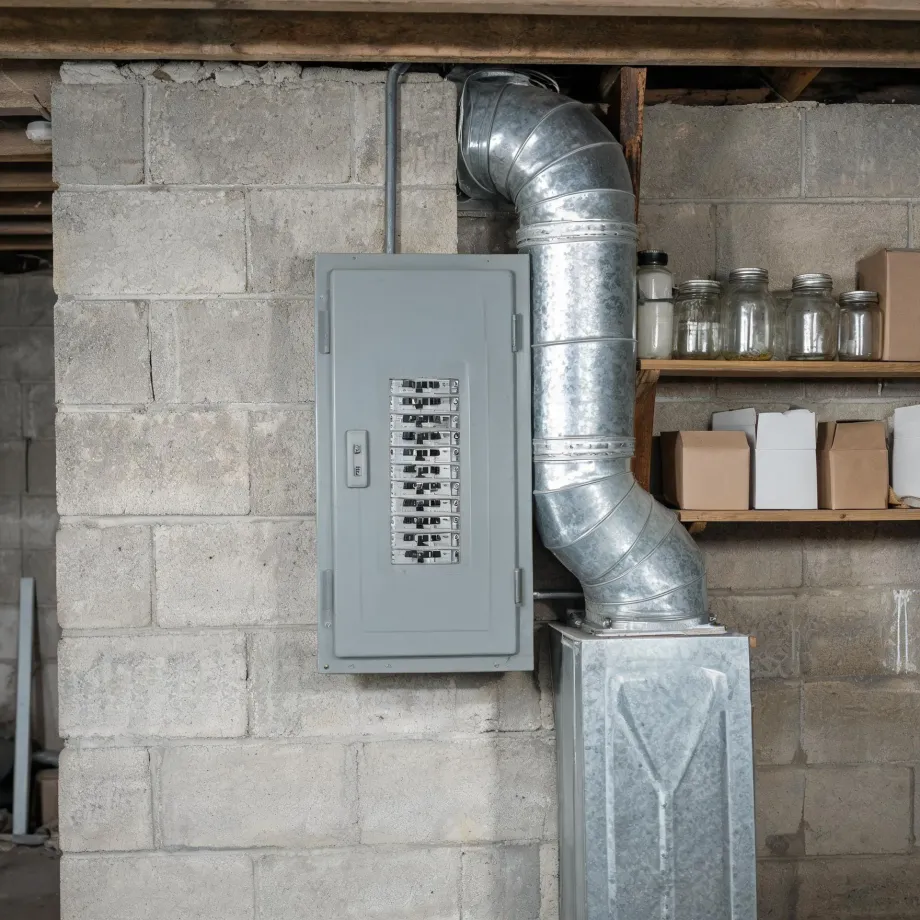
Housing built that long ago has had time to run through more than one mechanical system, and each replacement leaves its own history inside the equipment. Half the homes in Meeker County, Minnesota were built in 1975 or earlier (2020-2024 ACS 5-year). A heat pump that has been sitting in a house with that kind of age behind it may have refrigerant lines that have never been checked, electrical connections that have loosened through years of thermal cycling, and coils carrying residue that a newer installation would not yet have. When a contractor opens the unit, what they find there decides the repair scope, and in stock this old, what they find is rarely straightforward.
The Parts of a Heat Pump a Contractor Checks First
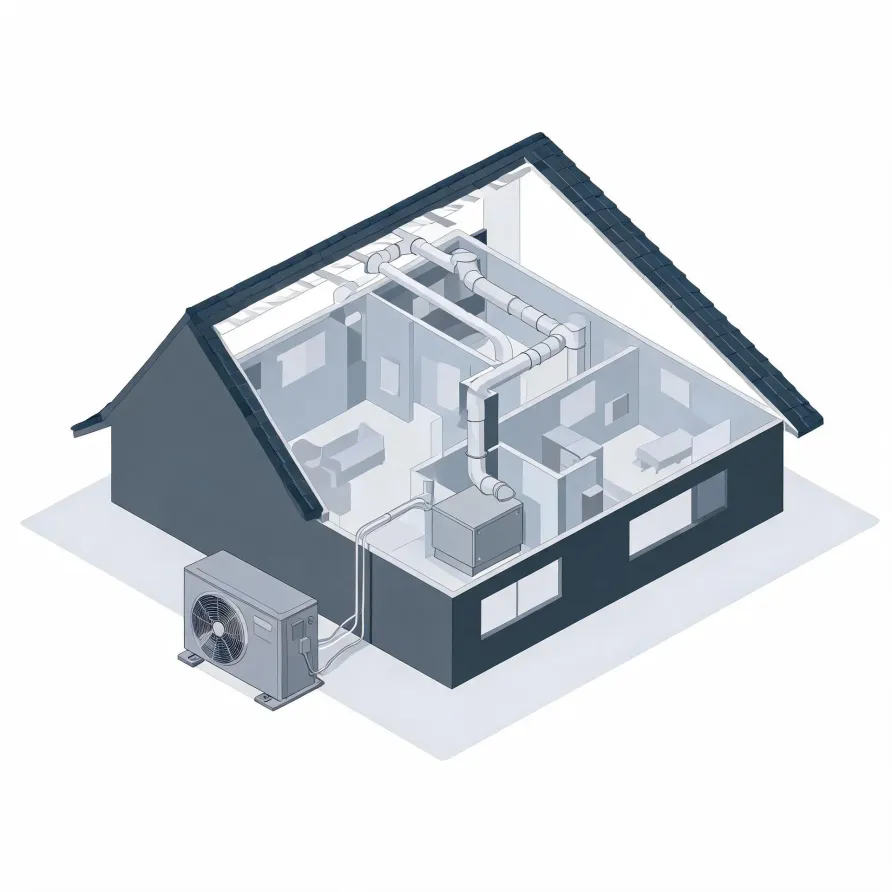
The outdoor unit sits outside the house and holds the compressor and condenser coil. The compressor is the part contractors look at early in a repair visit. When it labors or fails, the system loses the ability to move heat at all. The condenser coil sheds or absorbs heat through the refrigerant running inside it, and a bent, blocked, or leaking coil shows up fast in how the system performs.
The air handler lives inside the house, usually in a closet, attic, or utility room, and it contains the evaporator coil and the blower. The evaporator coil is a common fault point when a system blows air without conditioning it. The blower moves air across that coil and through the house, and a failing motor or a clogged filter behind it can mimic the symptoms of a refrigerant problem. The reversing valve, which sits inside the outdoor unit, is what lets a heat pump heat and cool, and a stuck valve is one of the first things a contractor rules out when the system works in one mode but not the other.
The drawing shows a typical layout, and a licensed contractor determines which components apply to your specific house and system.
Get matched in Meeker CountyMeeker County, by the numbers
83 severe weather events were recorded in Meeker County, Minnesota between 2015 and 2024.
NOAA National Centers for Environmental Information, Storm Events Database, bulk CSV export, events 2015-01-01 through 2024-12-31.Half the homes in Meeker County, Minnesota were built in 1975 or earlier (2020-2024 ACS 5-year).
U.S. Census Bureau, 2020-2024 American Community Survey 5-Year EstimatesMeeker County, Minnesota holds 10,735 housing units (2020-2024 ACS 5-year).
U.S. Census Bureau, 2020-2024 American Community Survey 5-Year EstimatesOwners occupy 79.3% of the occupied homes in Meeker County, Minnesota (2020-2024 ACS 5-year).
U.S. Census Bureau, 2020-2024 American Community Survey 5-Year EstimatesCodes & Standards Governing Heat Pump Repair in Meeker County, Minnesota2 sourced rules and standards
Licensing and Legal Requirements in Meeker County, Minnesota
Minnesota defines a mechanical contractor as a business that installs, repairs or maintains heating, ventilating, cooling or refrigeration systems — the definition that carries the exemption from the residential contractor licence.
Minnesota's residential contractor licence does not reach HVAC work: the licensing section carries its own exemption list, and a mechanical contractor is exempt from the licence requirement by name.
Severe Weather Events in Meeker County
Minnesota weather puts real stress on heat pump systems, and Meeker County is no exception. How hard a unit has worked over the years shapes what kind of repair attention it needs now.
83 severe weather events, 2015–2024. Source: NOAA National Centers for Environmental Information, Storm Events Database.