Tell us about the job
Takes about a minute. No obligation.

A contractor quoting heat pump repair in Clay County has to establish what actually caused the failure before recommending parts. 199 severe weather events were recorded in Clay County, Minnesota between 2015 and 2024. At that rate, severe weather is a standing condition of operating here, and the outdoor unit carries most of that load. Refrigerant lines, the compressor housing, and electrical connections on the outdoor section are the first things a contractor checks, because those are the components that take the hit when conditions turn hard. What a contractor finds there shapes the repair scope and the cost.
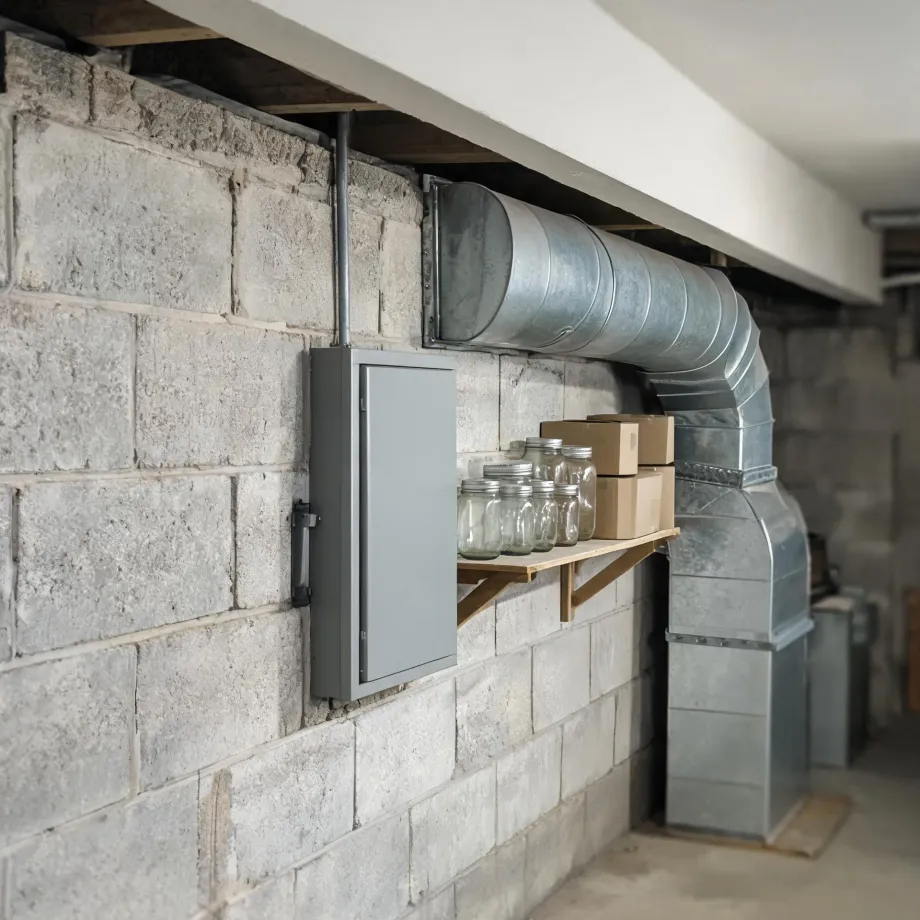
Heat pump repairs in older housing stock turn on what the equipment has accumulated, not on what the building was designed for. Half the homes in Clay County, Minnesota were built in 1981 or earlier (2020-2024 ACS 5-year). A heat pump installed into a house that old was added well after the original construction, so the refrigerant circuit, compressor valves, and reversing valve have been doing their work in a structure whose bones predate them entirely. When a contractor opens the unit, those components tell the story of the equipment's service life. Worn valve seats, refrigerant that has migrated, or a compressor running at reduced capacity are findings specific to that system and that history, and parts availability for equipment of that vintage is a real variable in how the repair resolves.
The Parts of a Heat Pump a Contractor Checks First
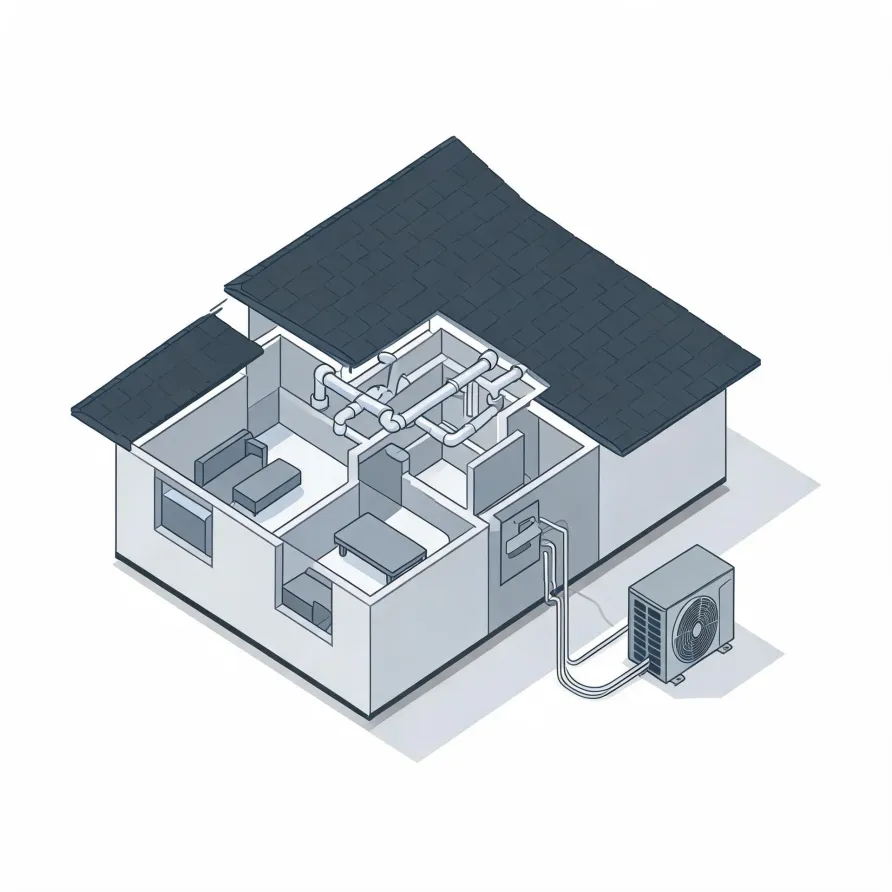
The outdoor unit sits on a pad beside the house and holds the compressor, which is the piece a contractor goes to first when a heat pump stops moving heat properly. Inside that cabinet the refrigerant coil and fan work together, and a fault in either one shows up fast as reduced output or ice on the coil. The compressor itself is the heart of the system, and its condition tells a contractor a great deal about what failed and why.
The air handler lives indoors, usually in a closet, attic, or utility space, and it contains the indoor coil and the blower that pushes conditioned air through the house. Running between the two units, the refrigerant lines carry the working fluid back and forth, and the reversing valve inside the system is what lets a heat pump switch between heating and cooling. A fault in the valve shows up as the unit stuck in one mode regardless of what the thermostat says.
The drawing shows a representative layout of these components, and a licensed contractor determines exactly which parts apply and what condition they are in for your specific home.
Get matched in Clay CountyClay County by the numbers
199 severe weather events were recorded in Clay County, Minnesota between 2015 and 2024.
NOAA National Centers for Environmental Information, Storm Events Database, bulk CSV export, events 2015-01-01 through 2024-12-31.Half the homes in Clay County, Minnesota were built in 1981 or earlier (2020-2024 ACS 5-year).
U.S. Census Bureau, 2020-2024 American Community Survey 5-Year EstimatesClay County, Minnesota holds 27,559 housing units (2020-2024 ACS 5-year).
U.S. Census Bureau, 2020-2024 American Community Survey 5-Year EstimatesOwners occupy 65.9% of the occupied homes in Clay County, Minnesota (2020-2024 ACS 5-year).
U.S. Census Bureau, 2020-2024 American Community Survey 5-Year EstimatesRules & Standards Governing Heat Pump Repair in Clay County, Minnesota2 sourced rules and standards
Licensing and Legal Requirements in Clay County, Minnesota
Minnesota defines a mechanical contractor as a business that installs, repairs or maintains heating, ventilating, cooling or refrigeration systems — the definition that carries the exemption from the residential contractor licence.
Minnesota's residential contractor licence does not reach HVAC work: the licensing section carries its own exemption list, and a mechanical contractor is exempt from the licence requirement by name.
Severe Weather Events in Clay County
Extreme weather puts heat pumps under load at the exact moments they are hardest to run. How often that happens here shapes how hard local equipment works and how often it needs attention.
199 severe weather events, 2015–2024. Source: NOAA National Centers for Environmental Information, Storm Events Database.