Tell us about the job
Takes about a minute. No obligation.

A contractor sent to repair a heat pump in Wadena County starts by asking what the system has already been through, because the answer changes what they find inside it. 124 severe weather events were recorded in Wadena County, Minnesota between 2015 and 2024. At that rate, severe weather is a standing condition of operating here, not a rare event, and components that carry the load of repeated stress show it in specific ways: refrigerant lines, capacitors, and outdoor coil surfaces all absorb that pressure over years. What a contractor checks first in a repair here is whether the failure traces to accumulated wear from that load or to something the weather had no part in, because the answer determines what gets replaced and what does not.
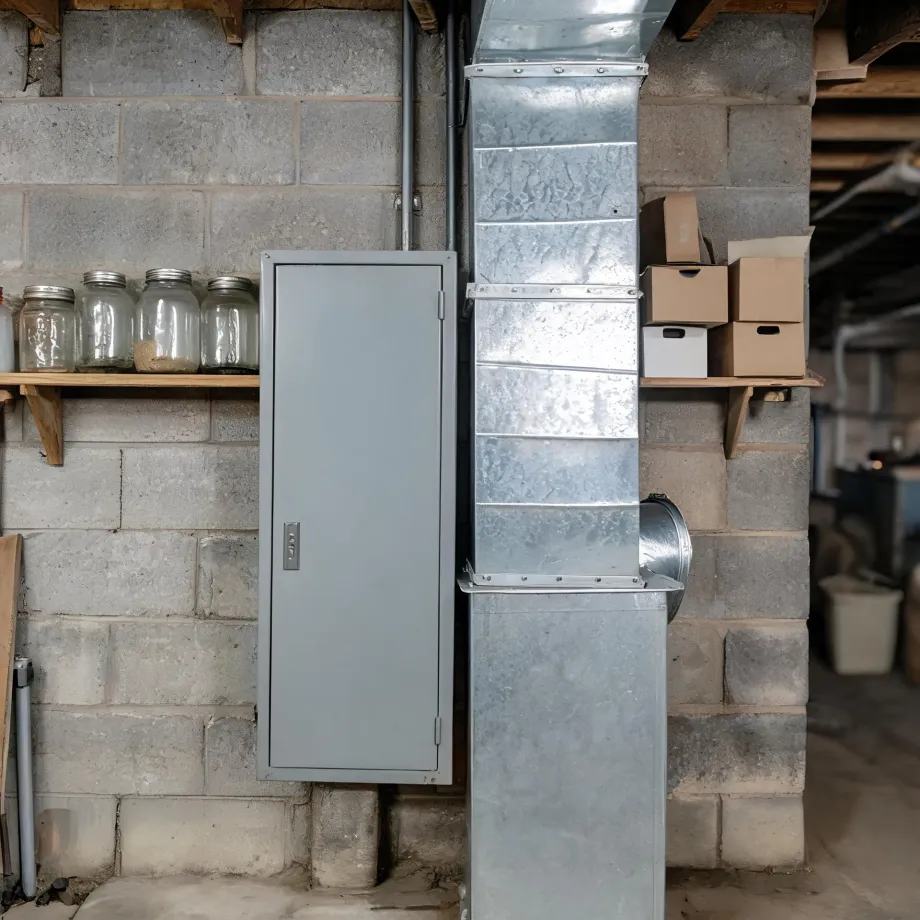
Ductwork laid down for one generation of equipment and then adapted for another carries its own history inside every joint and seal. Half the homes in Wadena County, Minnesota were built in 1974 or earlier (2020-2024 ACS 5-year). A heat pump that went into a house of that age arrived into a building that was not designed around it, which means the refrigerant lines, electrical connections, and internal components a contractor opens today have been working against that mismatch for years. When something fails, the real question is whether the replacement parts a system of that vintage requires are still in production. If they are not, the repair scope changes entirely before a price can be set.
The Parts of a Heat Pump a Contractor Checks First
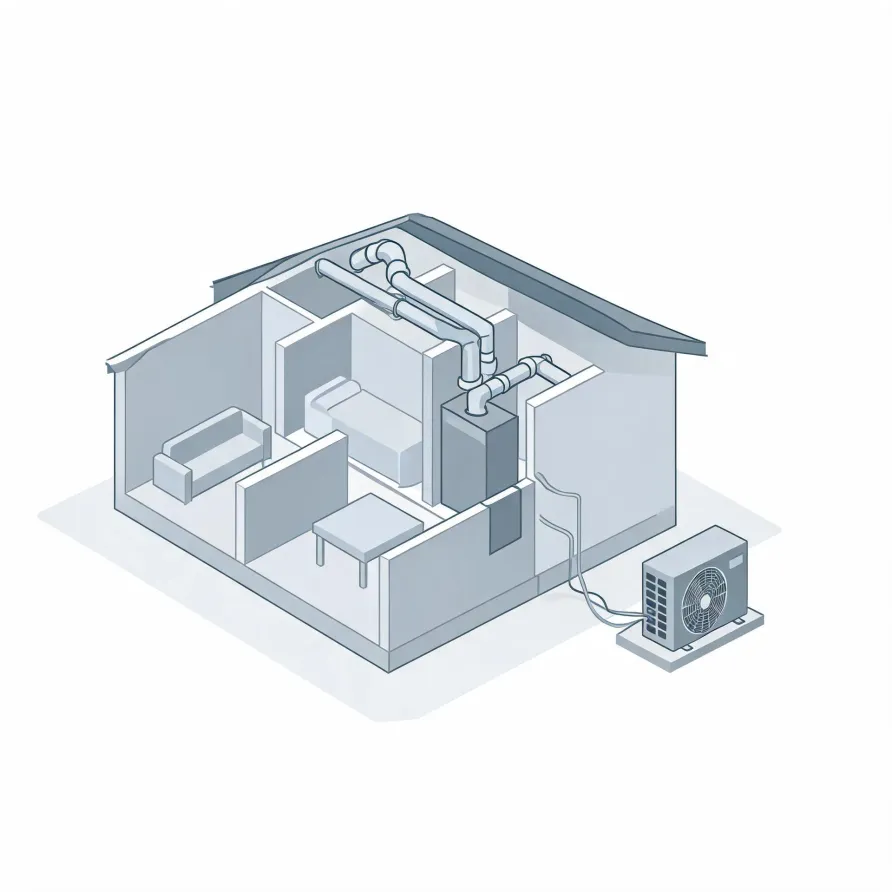
The outdoor unit sits on a pad beside the house and holds the compressor, which is the part contractors look at early when a heat pump stops moving heat properly. A failed compressor, a refrigerant leak, or a damaged coil inside that cabinet can each kill the system's ability to do its job. The fan that pulls air across the outdoor coil is another first stop.
Inside the house, the air handler hangs in a closet, attic, or mechanical room and pushes conditioned air through the home. It holds an indoor coil and a blower motor, both of which can be the source of warm air coming from vents or weak airflow. The reversing valve, which sits in the outdoor unit, is what a contractor checks when a heat pump heats in one mode but not the other.
The drawing shows a general layout of these components, and a licensed contractor will determine which parts apply and what each one needs in your specific house.
Get matched in Wadena CountyWadena County, by the numbers
124 severe weather events were recorded in Wadena County, Minnesota between 2015 and 2024.
NOAA National Centers for Environmental Information, Storm Events Database, bulk CSV export, events 2015-01-01 through 2024-12-31.Half the homes in Wadena County, Minnesota were built in 1974 or earlier (2020-2024 ACS 5-year).
U.S. Census Bureau, 2020-2024 American Community Survey 5-Year EstimatesWadena County, Minnesota holds 7,021 housing units (2020-2024 ACS 5-year).
U.S. Census Bureau, 2020-2024 American Community Survey 5-Year EstimatesOwners occupy 73.6% of the occupied homes in Wadena County, Minnesota (2020-2024 ACS 5-year).
U.S. Census Bureau, 2020-2024 American Community Survey 5-Year EstimatesRules & Standards Behind Heat Pump Repair in Wadena County, Minnesota2 sourced rules and standards
Licensing and Legal Requirements in Wadena County, Minnesota
Minnesota defines a mechanical contractor as a business that installs, repairs or maintains heating, ventilating, cooling or refrigeration systems — the definition that carries the exemption from the residential contractor licence.
Minnesota's residential contractor licence does not reach HVAC work: the licensing section carries its own exemption list, and a mechanical contractor is exempt from the licence requirement by name.
Severe Weather Events in Wadena County
Extreme weather puts real stress on heat pump systems, pushing them to run harder and longer than ordinary conditions demand. How much of that stress lands on equipment in Wadena County shapes what repair work looks like here and how often it comes up.
124 severe weather events, 2015–2024. Source: NOAA National Centers for Environmental Information, Storm Events Database.