

Profile view of a bearded man wearing a dark green baseball cap and a dark gray T-shirt against a plain light background.

What a heat pump tune-up covers in Minnesota

Step 1 of 3: Equipment

What does a heat pump tune-up include in Minnesota?

Minnesota puts a heat pump through both ends of the year, holding the house cool when it's warm out and carrying the heating load alongside the gas furnace once temperatures drop. Before the swing into either season, you want to know the unit was actually gone over and not just glanced at.

It covers both the cooling and heating sides of the unit, not just one

A technician checks refrigerant charge, cleans the outdoor coil, tests the compressor and fan motor, and inspects electrical connections, since a heat pump runs as your AC in summer and as part of your heat in winter. That matters in Minnesota because most homes here lean on gas for the coldest stretch, so the heat pump has to switch modes and work cleanly on both sides rather than sitting idle most of the year. A tune-up also checks the defrost cycle, which only comes into play once temperatures drop toward freezing. Skipping that check means a problem in cold weather might not show up until the unit already needs it most.

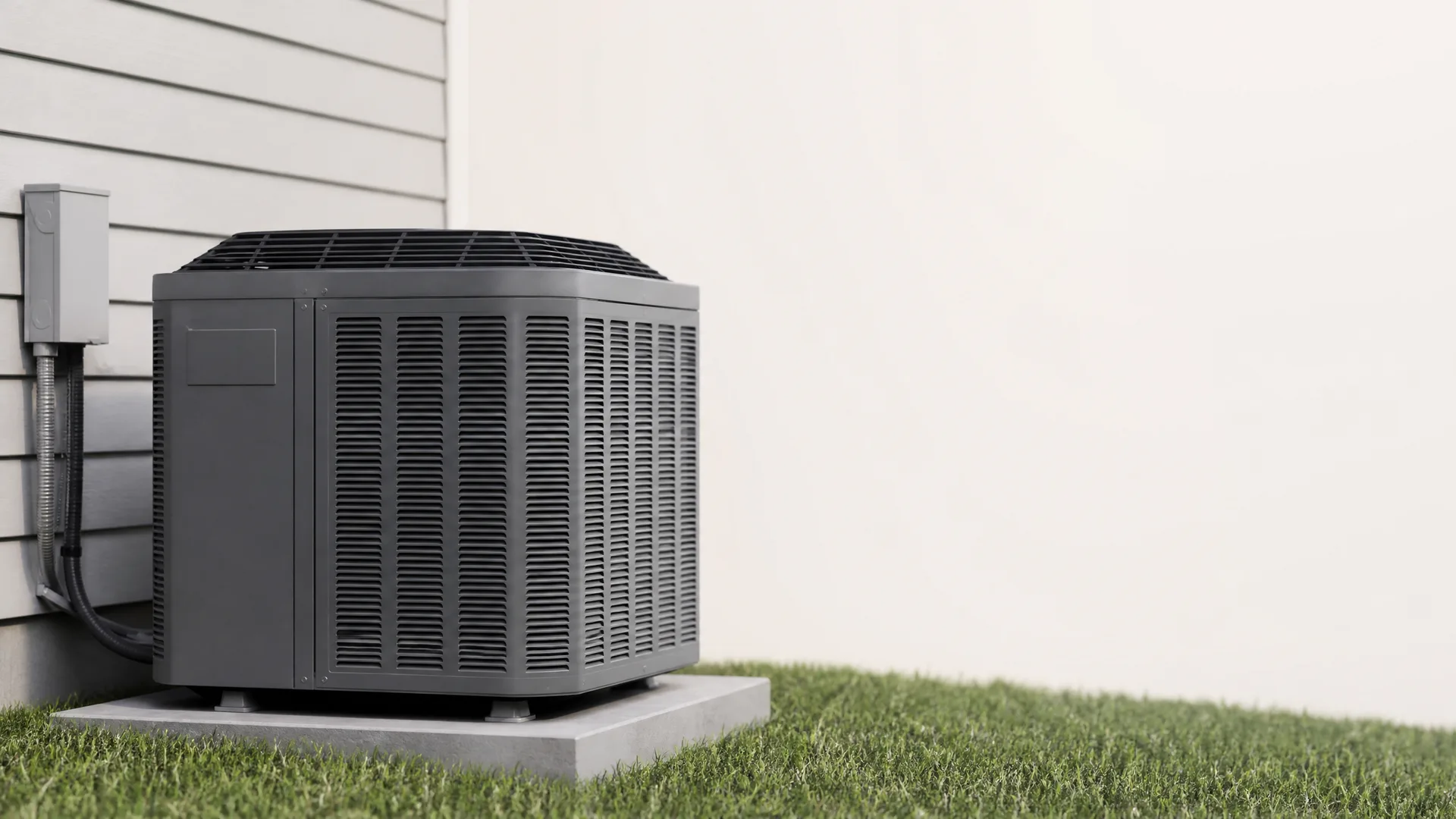
A gray outdoor air conditioner condenser unit on a concrete pad beside a house with horizontal siding and an electrical disconnect box, surrounded by grass.

Why the defrost cycle gets checked

A heat pump moves heat from outside air even when that air is cold, and frost builds on the outdoor coil as it does. The unit is built to reverse itself for a few minutes, melt that frost, then switch back. A tech checks that the reversing valve actually switches and that the sensor controlling it is reading right. If that cycle sticks, the coil ices over and the unit stops pulling any heat at all.

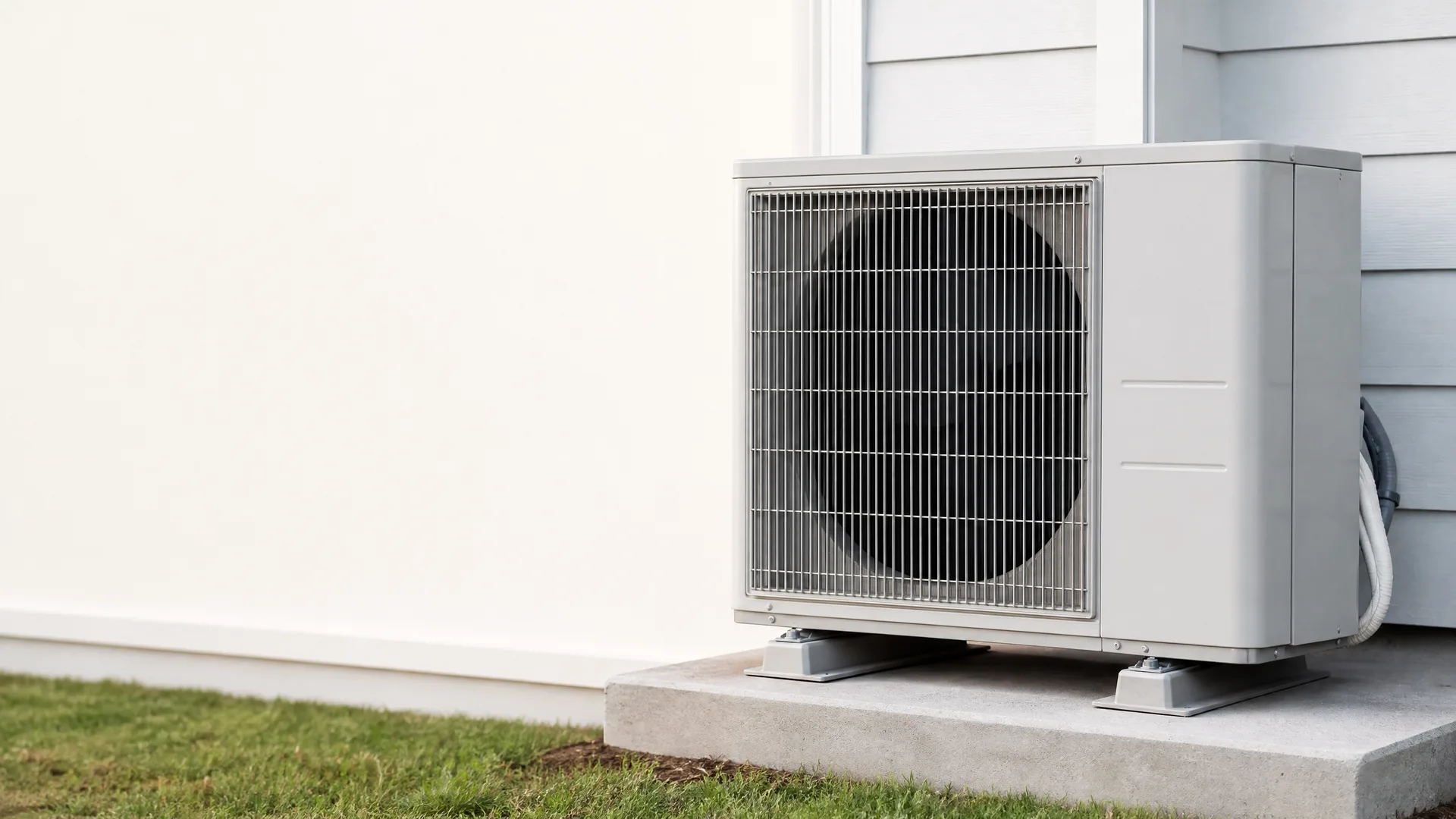
A white outdoor heat pump unit on a concrete pad beside a house with horizontal lap siding, with a plain light wall and grass lawn to the left.

What the refrigerant charge affects

The charge has to match what the manufacturer specs for that unit, not a rough fill. Too little and the system works harder to move the same heat, in July and in January both, since it's the same refrigerant loop doing both jobs here. A tech checks the charge against the pressures and temperatures the unit should be running at, not just a gauge reading on its own.

A smiling man in a denim shirt and white t-shirt stands in an open dark doorway of a stucco house, facing a woman with long brown hair and a green jacket seen from behind in the foreground.

What skipping it costs you later

A heat pump that's low on charge or fighting a dirty coil will still run. You won't necessarily hear it struggling. What you'll see instead is a higher electric bill in January and a house that takes longer to feel warm, because the system is working harder to move the same amount of heat. Your gas furnace picks up more of the load than it should, which isn't what either system was sized for.

Finding someone to look at it before that happens usually means a string of calls: checking who's licensed, who services heat pumps specifically and not just furnaces, who can actually come out before the cold sets in. Answer a few questions here and that search is done for you. A contractor who works on heat pumps in your area gets your information and follows up, so you're not the one tracking down a tech in November.

Interior corner of a room with a window and sheer curtain at left, a gray upholstered sofa with a cushion at right, and a round wooden table holding stacked books and a round vase with an olive branch.
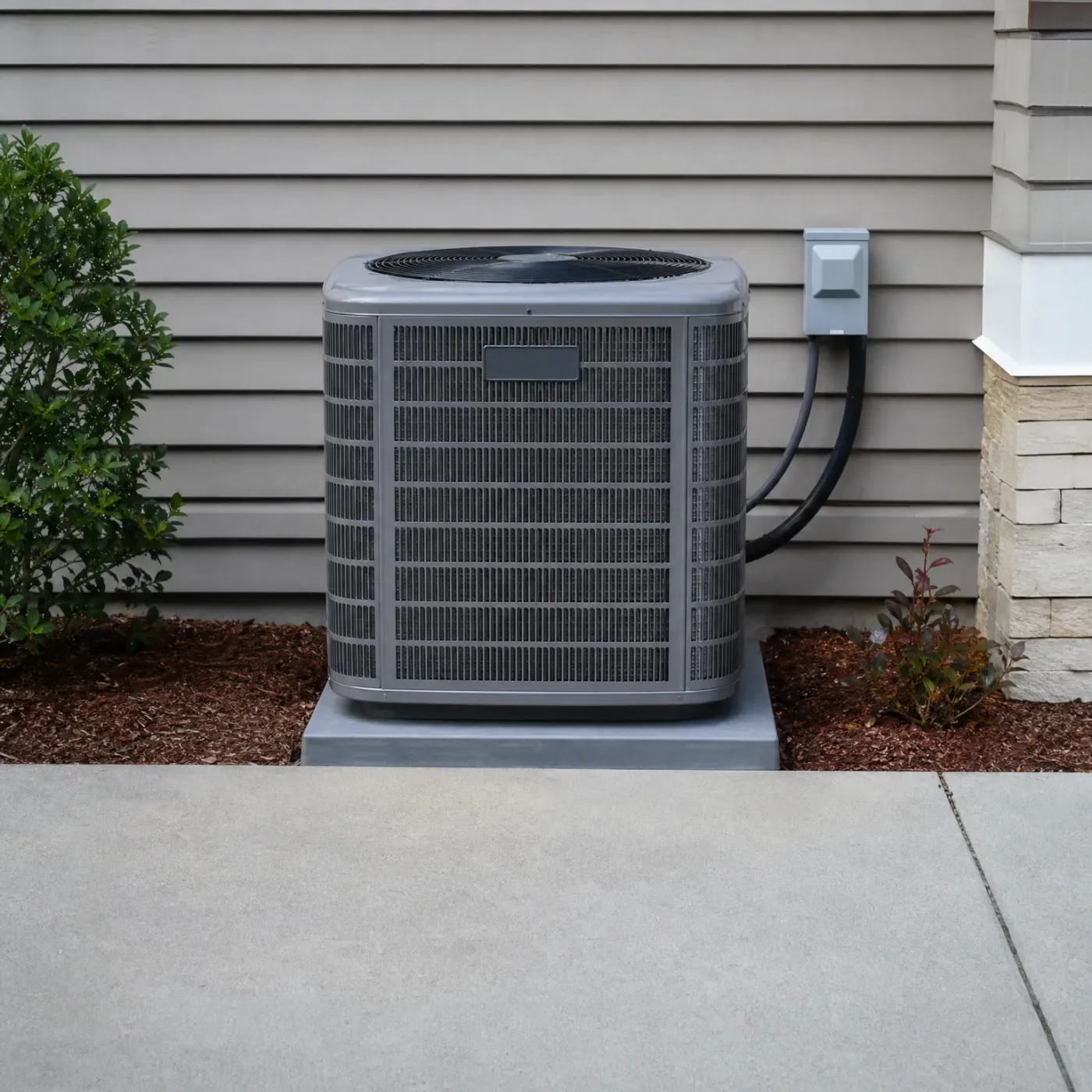
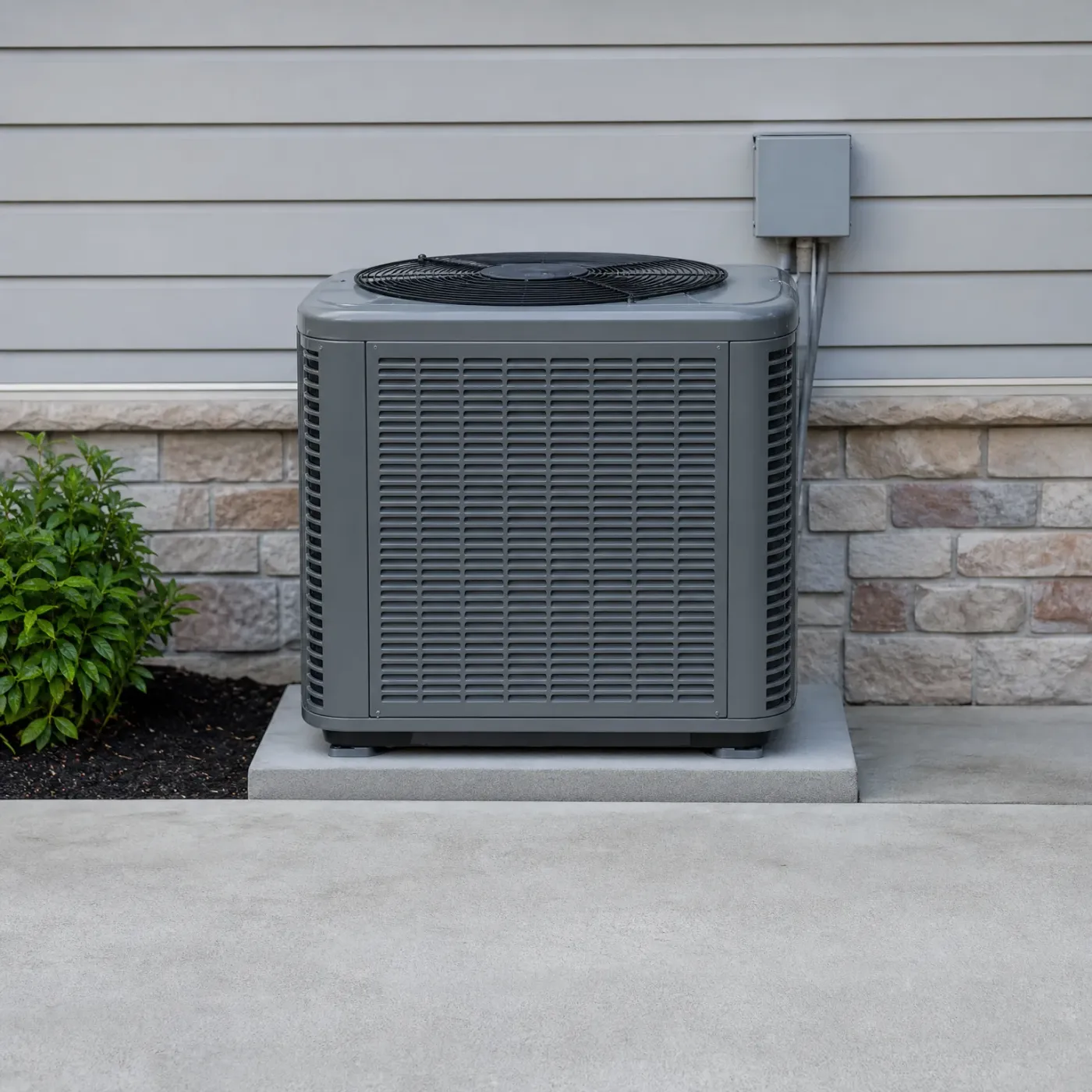
A gray outdoor condenser unit sits on a concrete pad against a house wall with horizontal siding above a stone veneer base, with an electrical disconnect box and conduit on the wall and a leafy shrub in mulch to the left.

Running clean

Coil fins are clear, the pad is level, and the disconnect box is secure. Air moves through the outdoor unit the way it's built to, which matters most in January when it's pulling heat out of cold air for hours at a stretch. Nothing here is fighting the unit.
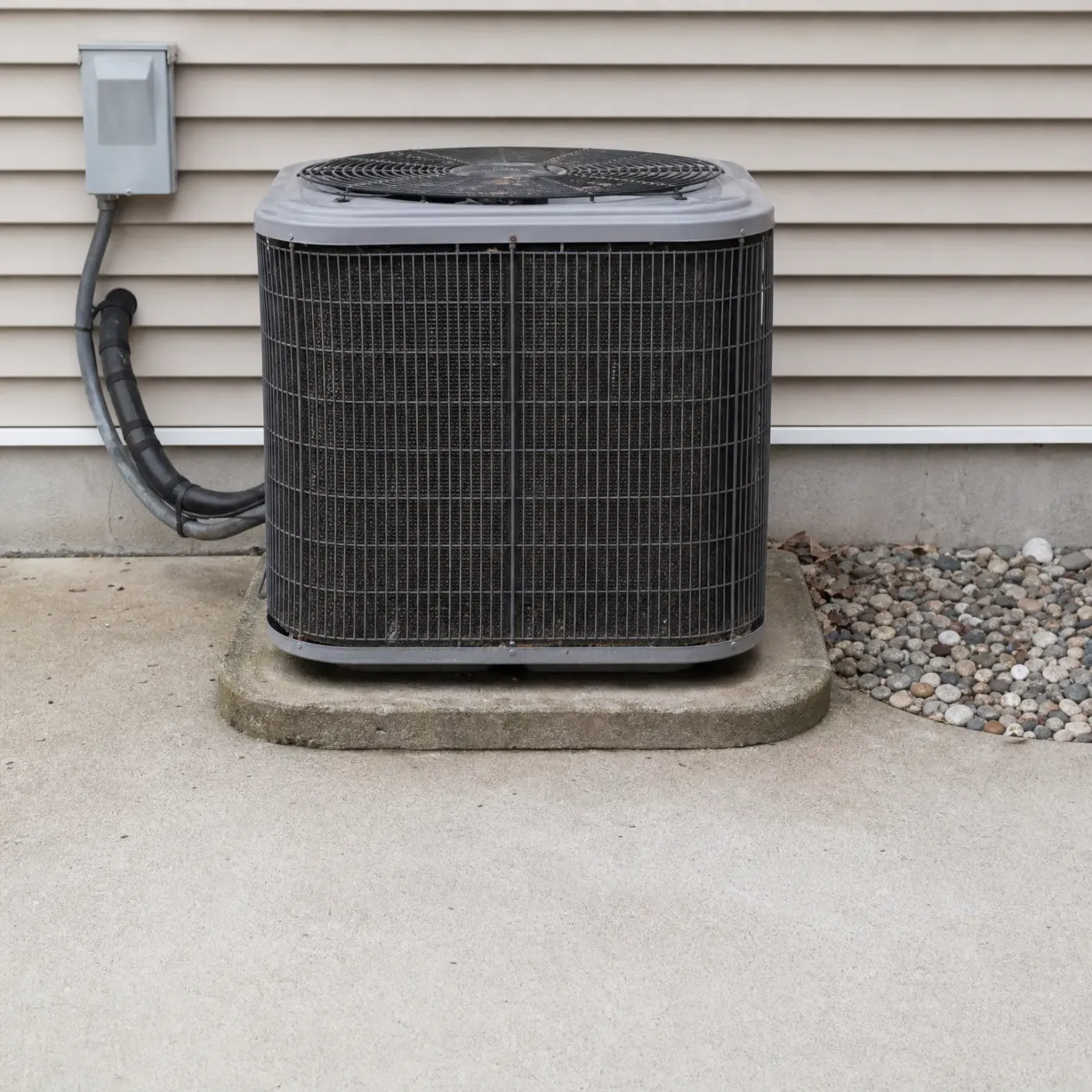

An outdoor air conditioner condenser unit on a concrete pad beside a house with beige vinyl siding, with a gray electrical disconnect box and insulated refrigerant lines on the wall and river rock to the right.

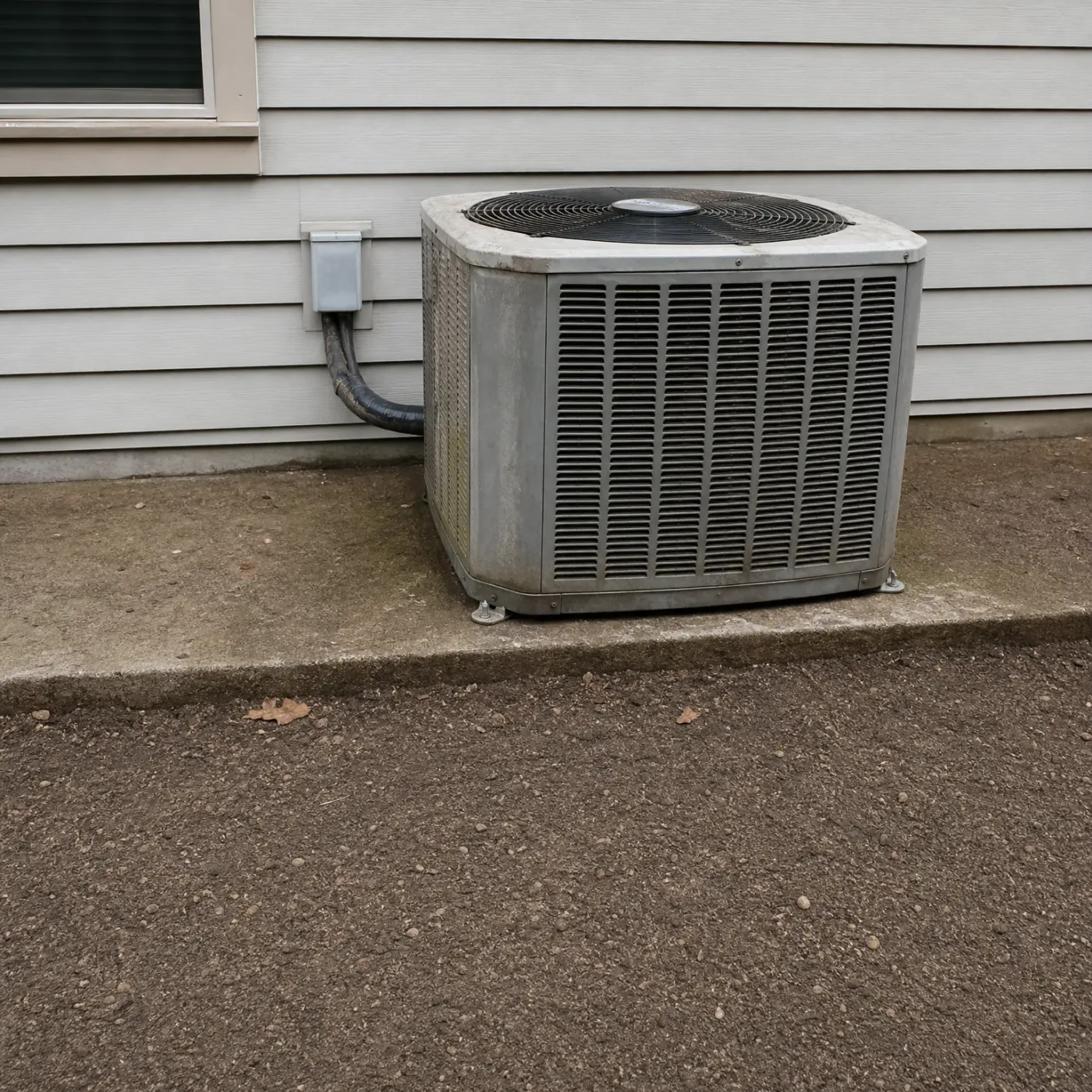
Coil clogged with debris

Dirt and yard debris have packed into the fins, so the unit can't pull heat from the air as well as it should. It'll keep running, but it'll work harder to do it, and a heat pump already working against a Minnesota winter doesn't need the extra load.

A woman with long gray hair wrapped in a checked blanket sits on a sofa by a window with yellow autumn foliage outside, with a lamp, framed picture and plant in the background.
An older woman in a cream knit sweater sits on a sofa by a window, looking out at sunlit trees with yellow and orange autumn leaves, with a bookshelf and lamp behind her.
A woman with gray shoulder-length hair in a dark knit sweater sits on a cushioned seat by a window, looking out at yellow autumn foliage, with a living room, armchair, houseplant and framed picture behind her.
An older woman with gray hair in a bun, wearing a cream knit sweater, sits on a sofa with a gray blanket and looks out a large window toward yellow-green autumn trees, with a lit table lamp and dark armchair behind her.

A heat pump pro near you

Fill out one form instead of calling around for a heat pump tune-up.

Asking costs nothing, and the choice to hire stays yours.

Scheduling it before the swing hits

You call around in September or October, trying to find someone who can get to it before the heat pump has to switch over and start carrying the load alongside the furnace. Every contractor quotes it differently, half of them want to describe the symptoms again before they'll give you a number, and you're sorting through it all while still deciding if this is even the year you need it done. Matching with a contractor who already knows the Minnesota swing skips that part. You explain your setup once, and the outreach comes to you instead of the other way around.

Dealing with it after a cold snap

You put it off, the first real cold snap hits, and now you're calling around with a house that's slow to warm and a bill you haven't seen yet. That's a worse time to be comparing quotes and explaining the same thing to three different companies, because now there's urgency pushing you into whoever answers first. A tune-up scheduled ahead of that means you're matched with a contractor on your own timeline, not scrambling once the furnace is already carrying more than it should be.

A woman in a cream knit sweater sits in an armchair with her eyes closed and a slight smile, beside an open window showing orange autumn foliage, with a mug, books and a lit candle on a small side table.
An older man with gray hair and a beard leans back on a beige sofa with his eyes closed, in a sunlit room with potted plants, a wicker chair and large windows behind him.

A tech starts with refrigerant charge, measured against the manufacturer's spec, because a system running low or overfilled makes the compressor strain whether it's pushing heat out in July or pulling it in from cold air in January. From there it's the reversing valve, the part that lets the same unit heat and cool, tested to confirm it switches when the thermostat tells it to. Electrical connections at the outdoor unit get tightened, since anything loose tends to work itself looser over a winter here rather than fix itself. The outdoor coil gets cleaned, because a coil caked with debris can't move air the way it needs to, and that matters most on the long cold stretches when the unit is working hardest to pull heat from outside air. The backup heat strips get checked too, since those are what carry the house on the days the heat pump alone can't keep up. Indoor airflow gets measured last, and a weak reading there often shows up as a higher bill before it ever feels like a comfort problem.

What a tune-up actually checks

  • A tech checks refrigerant charge against the manufacturer's spec, since too little or too much makes the compressor work harder in both directions.
  • The reversing valve gets tested so the system actually switches between heating and cooling when the thermostat calls for it.
  • Electrical connections at the outdoor unit get tightened, since a loose connection run through a Minnesota winter is more likely to fail.
  • The outdoor coil gets cleaned so air can move through it freely, which matters most when it's pulling heat out of cold air for hours.
  • A tech checks the auxiliary or backup heat strips, since those are what kick in if the heat pump can't keep up on the coldest days.
  • Airflow gets measured at the indoor unit, since restricted airflow shows up as higher bills before it shows up as a comfort problem.
An outdoor air conditioner condenser unit on a concrete pad beside a light gray vinyl-sided house, with an electrical disconnect box and conduit on the wall and bare soil in the foreground.
Before you get your heat pump maintenance
A gray outdoor condenser unit sits on a concrete pad beside a house with horizontal lap siding, with a wall-mounted disconnect box and refrigerant lines, mulched beds and a shrub nearby, and a concrete walkway in the foreground.
After you get your heat pump maintenance
  1. Tech reads outdoor and indoor coil temperatures before touching anything.

  2. Electrical connections get tightened and checked for correct amp draw.

  3. Condensate drain gets cleared so defrost water has somewhere to go.

  4. Thermostat gets cycled through heat and cool to confirm the changeover works.

Power costs 15.83 cents per kilowatt-hour statewide

At 15.83 cents per kilowatt-hour, every bit of extra work your heat pump does this winter shows up on the bill fast. A compressor straining because of low charge or a dirty coil draws more power for the same heat, and at that rate it adds up over a Minnesota winter.

EIA-861 2025 statewide residential average

A heat pump tune-up in Minnesota checks the parts that carry it through both jobs: the defrost cycle, the refrigerant charge, the reversing valve, the coil, the electrical connections. Skip it and the unit still runs, just harder, and that shows up as a higher bill in January and a house that's slower to warm. The part of this that's actually a hassle isn't the tune-up itself, it's finding someone to do it. Getting quotes from a handful of contractors, explaining the same thing to each one, waiting to hear back before the cold sets in, that's the work. You don't have to do that part. Once you're matched with a contractor who handles heat pumps in your area, they reach out to you, and the calling around is done. What's left is the actual service, scheduled before the heat pump has to start carrying the load alongside your furnace.

Corner of a house with light horizontal lap siding, a white gutter and downspout, and a window, beside a mulched bed with small shrubs, a lawn, wooden fence and trees in the background.
Close-up of a white gutter along an asphalt-shingle roof edge with dry brown leaves collected in it, a downspout and lap siding below, and blurred autumn trees in the background.
Exterior corner of a house with horizontal lap siding above a stone veneer base and a dark-framed window, with ornamental grasses and shrubs in the foreground and trees in low sunlight behind.
A white horizontal-siding house with a steep gray shingled gable roof, fronted by trimmed shrubs, a brick walkway, and a lawn scattered with fallen autumn leaves.
Corner of a house with cream horizontal lap siding, a black-framed window, asphalt shingle roof with dark fascia, white hydrangea blooms and green shrubs below, and a leafy tree and wood fence to the right.

A local pro for your heat pump maintenance

Skip calling around to set up a heat pump tune-up.

Request a pro

No fee to send it, and nothing to sign.