

Running on its own
This is your heat pump on a normal day. The outdoor unit pulls in air, the lines carry refrigerant to the house, and the thermostat stays on regular heat. No ice, no frost, no backup heat kicking in. It's doing the job by itself.
Tell a local repair pro what your heat pump is doing.
Find a pro near meEmergency heat is a setting on your thermostat that shuts off the outdoor unit and makes your heat pump run on backup electric or gas heat only. In Minnesota, winters push the outdoor unit hard, and once temperatures drop into the teens and single digits, or if the coil ices over and can't defrost, the heat pump stops pulling warmth from outside air efficiently. That's when the system either switches automatically or you switch it yourself to emergency heat. It's meant to be temporary. Backup heat costs more to run than the heat pump itself, so leaving it on for days instead of hours usually means something is wrong with the outdoor unit, not that the weather called for it. If your thermostat is stuck on emergency heat and the outside temperature isn't extreme, the heat pump likely needs a look from someone who knows what tends to fail on these systems in Minnesota winters.
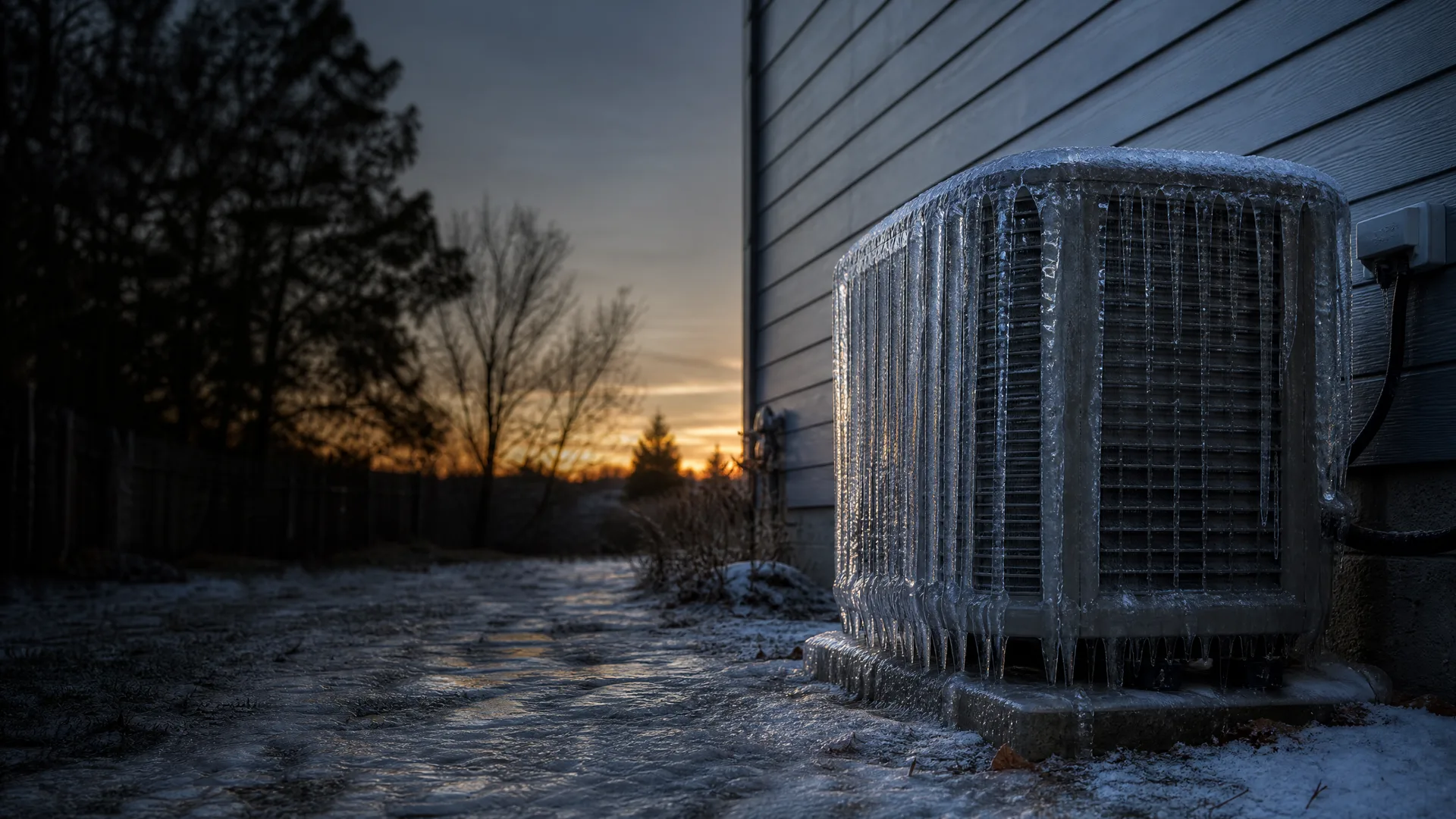
You're up before the sun, same as every January morning, and you go out for the paper or to start the car. The side yard is dark and still, maybe ten below with the wind off the flat ground. Your heat pump sits against the house, and it's wearing ice like a shell, thick over the coils and down into the fins. Not a dusting of frost. A solid coat. Inside, the house is warm, the furnace or the backup strip doing the work it was built to do. Outside, the unit you rely on nine months of the year stands frozen solid, waiting for a thaw cycle that isn't coming on its own this cold.
You'll see the thermostat display change, usually to "EM HEAT" or "EMERGENCY HEAT," and the air coming out of your vents will feel hotter than you're used to from the heat pump alone. The outdoor unit goes quiet. If backup heat is gas, you might hear the furnace burner kick on where it used to stay off. If it's electric strip heat, you may notice the blower running longer and your electric bill climbing, since strip heat costs more to run than the heat pump. If emergency heat turns on by itself and stays on for days, something is wrong with the heat pump, not the cold. Left alone through a Minnesota winter, that's your whole heating bill carried by backup heat until someone looks at the unit outside.
The thermostat switches from heat pump mode to backup heat only.
The outdoor unit shuts down and stops drawing in cold air.
Electric strip heat or the gas furnace takes over heating alone.
Air coming from your vents gets noticeably hotter right away.




Your request stays with one local pro.
Describe your heat pump job, and a local pro who handles it gets in touch.
Asking costs nothing, and the choice to hire stays yours.

If emergency heat stays on for more than a day, your electric bill will show it. Strip heat and gas backup can keep a house warm through a cold snap, but they weren't built to carry the whole house all winter, and running that way for a week is different from running it for one bad night. Your house will feel warm either way. What changes is what's working to make it warm, and whether the system behind it is actually broken or just locked out by the cold.
You don't need to know which it is before you get help. A furnace that won't come out of emergency heat once temperatures climb back into the twenties usually has something keeping it there, and that's worth having someone look at before the next cold stretch rolls in. A local contractor who works on heat pumps through a Minnesota winter has likely already seen whatever yours is doing. Get matched with one, and they'll call you to sort out what's actually going on at your house.

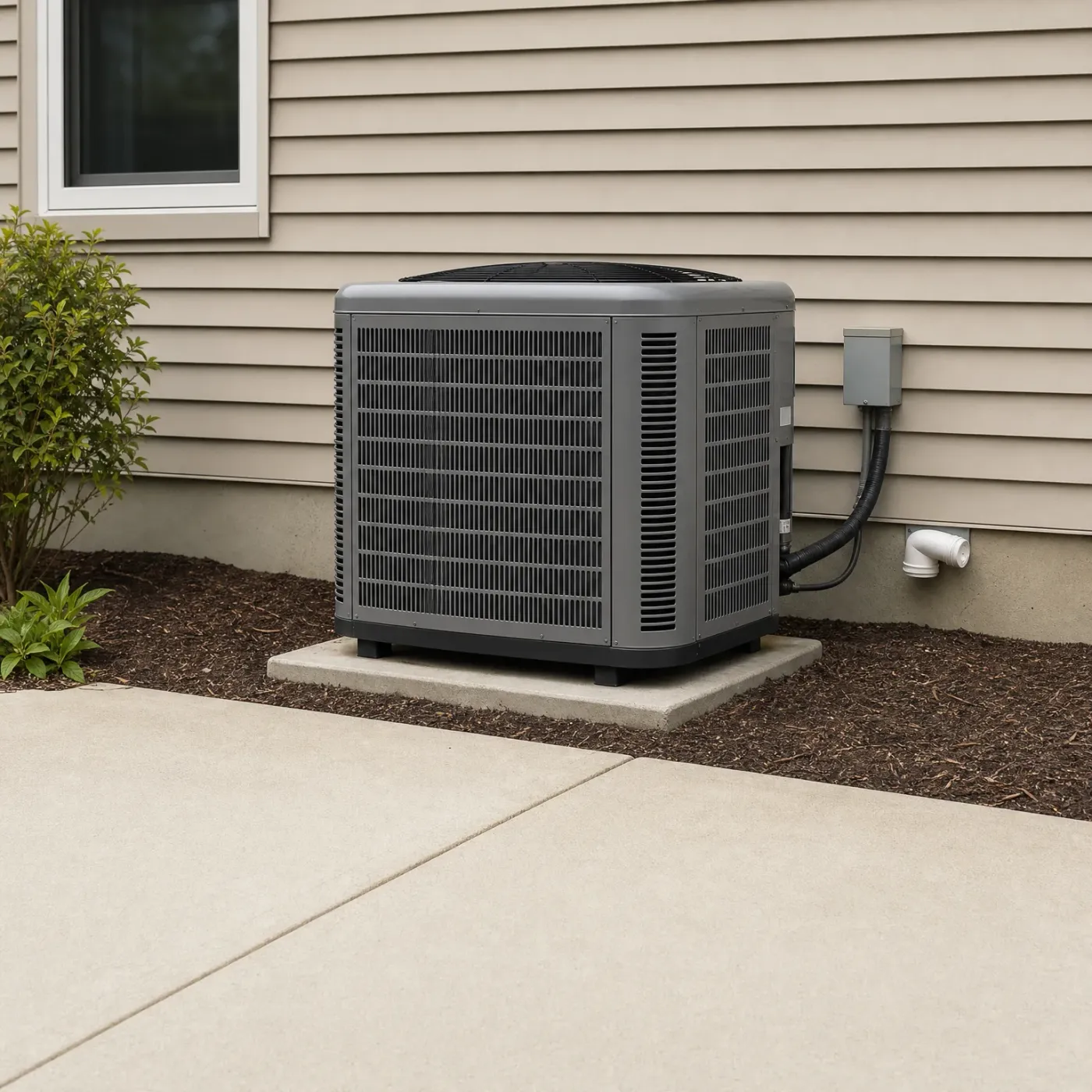
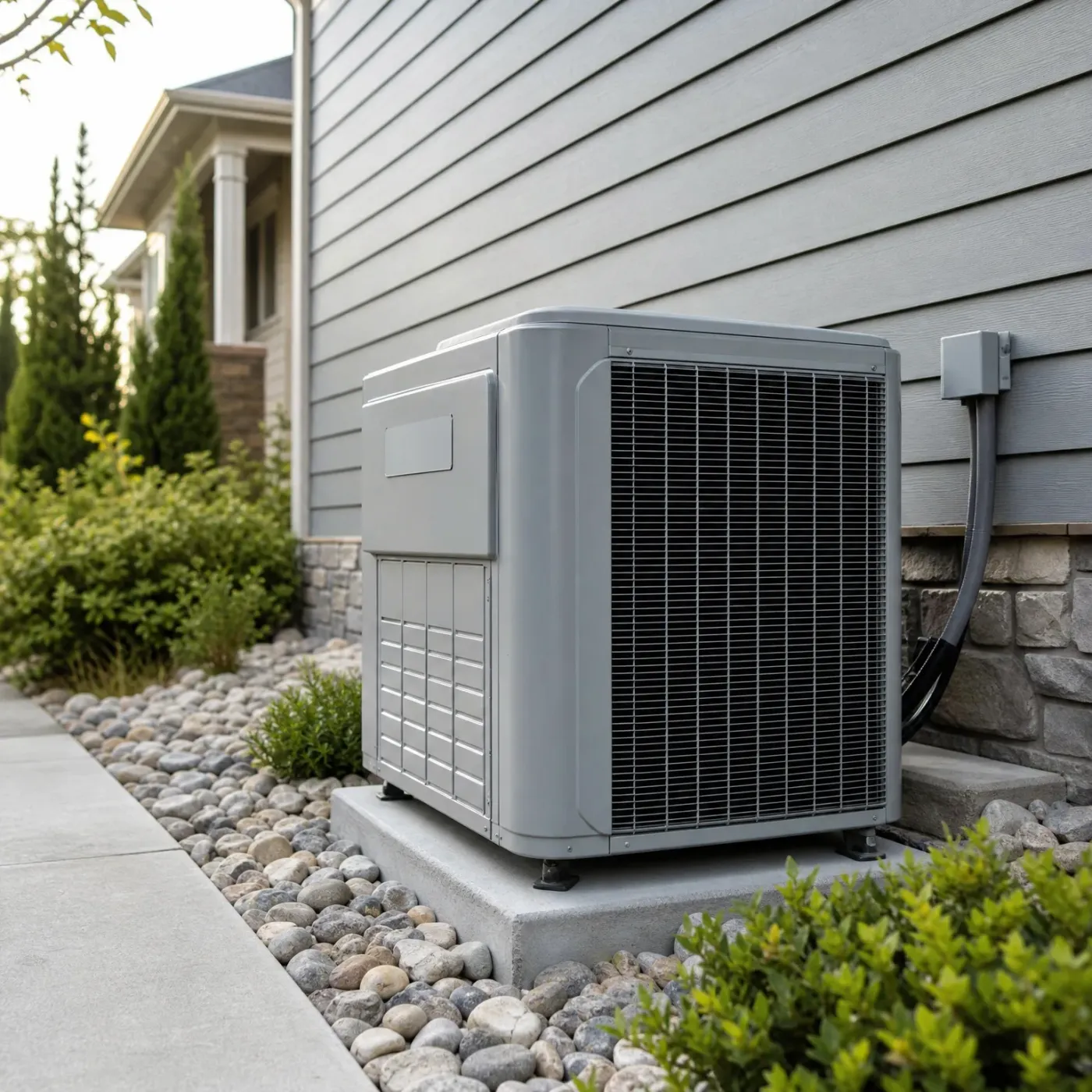
This is your heat pump on a normal day. The outdoor unit pulls in air, the lines carry refrigerant to the house, and the thermostat stays on regular heat. No ice, no frost, no backup heat kicking in. It's doing the job by itself.
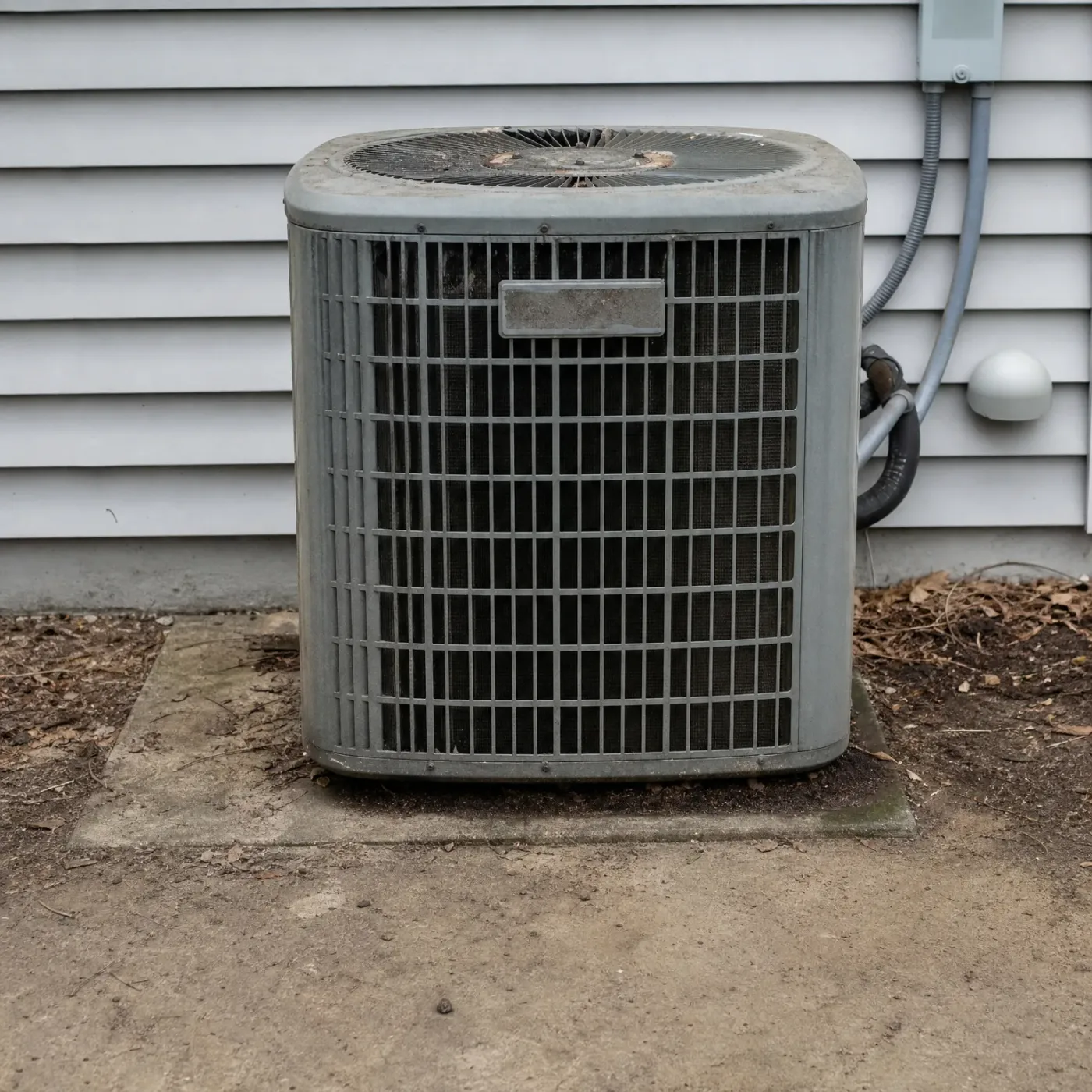
Dust and grime on the grille block airflow the unit needs to run. Dead leaves piled at the base can do the same. A heat pump working this hard to breathe is a candidate for emergency heat, or for a service call before it gets there.
At 15.83 cents a kilowatt-hour, running the strip heat or gas furnace on emergency heat costs more per day than your heat pump pulling its own weight. A short cold snap won't hurt much, but if that EM HEAT light stays on past a day, it's worth finding out why your outdoor unit stopped instead of letting backup heat carry the house.
EIA-861 2025 statewide residential average
EM HEAT on your thermostat just means the outdoor unit is off and your backup heat, electric strip or gas furnace, is carrying the house by itself. On a Minnesota morning with the temperature in single digits or below, that's the system doing what it's supposed to do. An hour or two of it during a cold snap isn't a problem. You'll likely notice the air from your vents running hotter than usual, and that's the backup heat working, not a sign of trouble.
What tells you something's wrong is time. If that EM HEAT light is still on the next day, or the day after, the outdoor unit isn't coming back on its own once the weather eases, and that's worth looking into. Sometimes it's ice that built up past what a normal defrost cycle clears. Sometimes it's something else in the outdoor unit keeping it from running. Either way, the furnace or strip heat is covering for it, and at 15.83 cents a kilowatt-hour, that costs more than your heat pump pulling its own weight.
You don't have to guess which one it is. A contractor who works on heat pumps through a Minnesota winter has likely seen the same thing on another house nearby that week, and can tell you in short order whether it's just the cold or something keeping your unit from doing its job.


Get your heat pump to the right pro
Your request goes to one pro, not a list of companies.