Why your heat pump has ice on it in a Minnesota winter
Send the request today and let a heat pump pro reach out to you.
A little frost along the bottom edge of the outdoor unit is normal in a Minnesota winter. A heat pump sitting under a solid sheet of ice, with coils you can't see anymore, is not. When that happens, the unit can't pull heat from the outside air, and it will run and run without warming your house.
Minnesota winters put a heat pump through real work. The defrost cycle is supposed to clear that frost off automatically, several times a day when it's cold enough. When it stops doing that, ice builds instead of melting, and it builds fast once it starts. A stuck reversing valve, a bad defrost sensor, or a fan that's slowed down can all be behind it.
Most homes here heat with gas, so a heat pump that ices over usually isn't leaving you without any heat at all. But it is costing you money while it struggles, and it can damage the compressor if it keeps running iced up. That's worth getting looked at before it gets worse, not after.
Figuring out which part failed means someone qualified has to get eyes on the unit. On your own, that's calling around to find a contractor who works on heat pumps, explaining the ice buildup over the phone, waiting to see if they call back, then doing it again with the next name on the list if they don't.
Send the form on this page and that search is done. You won't be the one tracking down who's available or free this week in your part of Minnesota. A contractor who works on heat pumps gets your information and takes it from there. The part where you're the one hunting for help ends the moment you send it.
Why does my heat pump keep icing up in the winter?
Frost on the bottom of the unit is normal. But if you're seeing ice building up on the coils every few hours, all through a cold snap, and the unit seems to be running more and heating less, something beyond normal winter frost is going on.
It's running a defrost cycle that isn't keeping up, or it's low on refrigerant
Every heat pump builds frost in winter and clears it with a defrost cycle, reversing briefly to melt the ice off the coil before going back to heating. When that cycle runs on a bad timer, a stuck reversing valve, or a defrost sensor that's failed, ice builds up faster than the unit clears it. A low refrigerant charge does the same thing by dropping the coil temperature too far. In a Minnesota winter, with the unit working through weeks of cold instead of the odd cold night, a system that's barely keeping up with defrost gets buried fast. Once the coil is fully iced, it can't absorb heat from the outside air at all, and the system either keeps running without heating or shuts itself down.
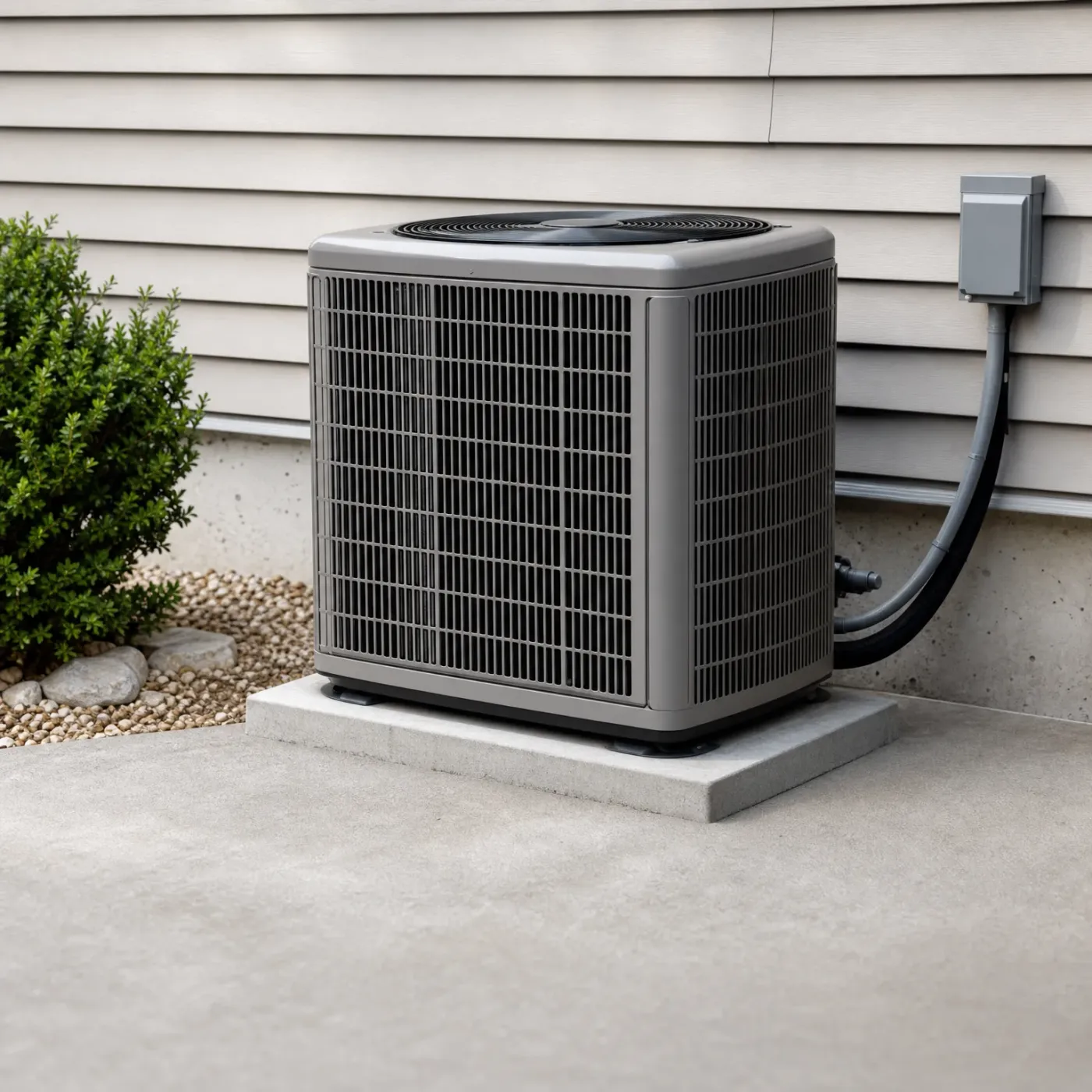
Normal winter frost
This is what a heat pump should look like on a cold Minnesota morning. A thin layer of frost along the bottom of the cabinet, coils still visible behind the grille, and the fan running freely. The unit defrosts itself on a schedule and keeps heating the house without any help.
Iced over and struggling
This is different. The coil guard is caked over and the fan can barely turn behind it. Airflow is blocked, the unit runs longer to make less heat, and the ice keeps building instead of melting off on its own. This is when it needs a technician, not more time.
It's off your list after this
Describe what your heat pump is doing once, in one form.
Get the heat pump repair search off your mind today.
No charge to send it. You decide if you hire them.
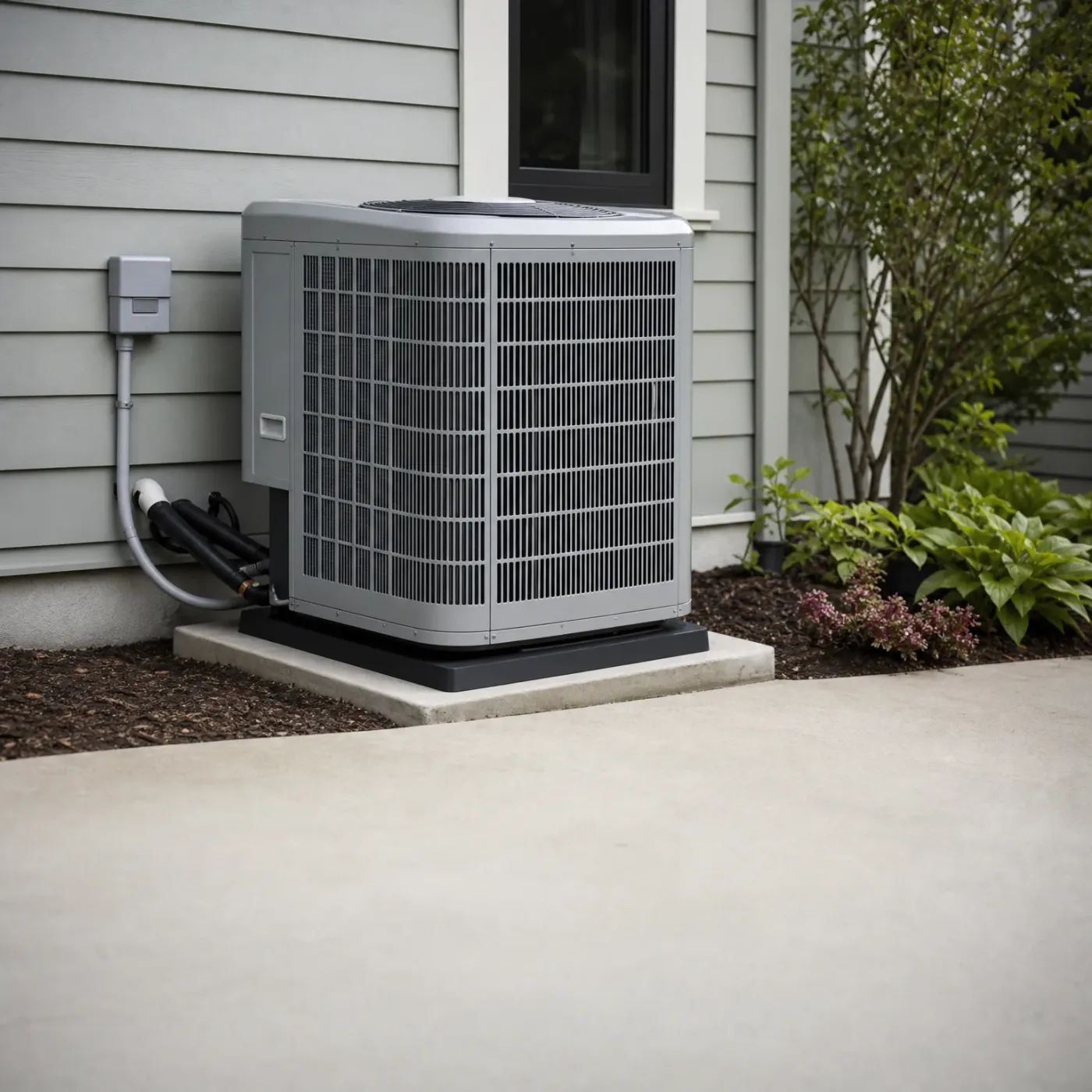
A heat pump that's defrosting on its own schedule clears off and goes right back to pulling heat from the air, no ice buildup left behind.
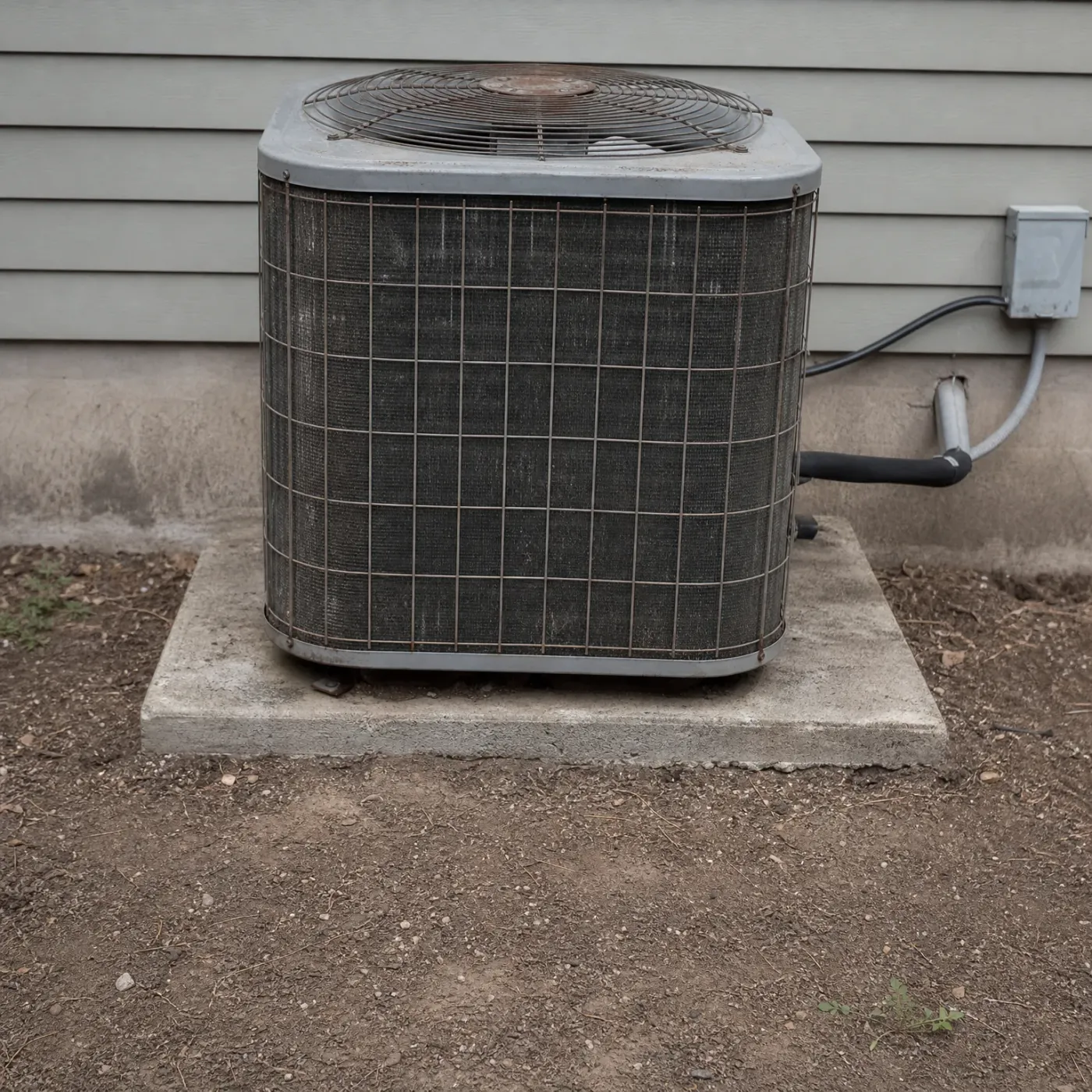
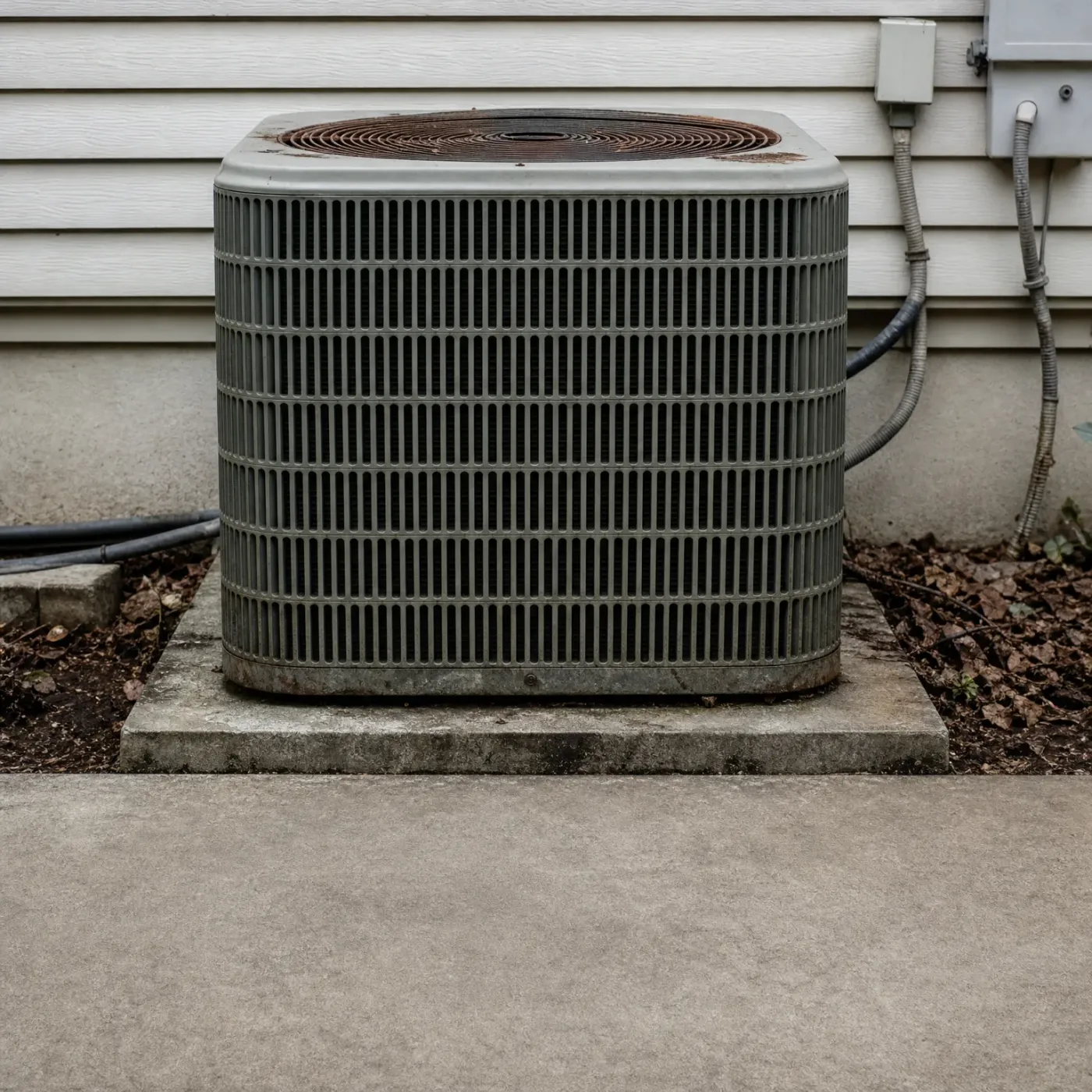
Rust on the cabinet and dirt packed around the base make it harder for a unit to shed ice the way it's supposed to.
Is the ice on your unit actually a problem
Go out and look at it. If the coils are buried and you can't see metal through the grille, that's your answer. You might notice the fan has stopped turning, or it's straining to turn under the weight of the ice. Inside, the air coming out of your vents feels cooler than it should, and the unit runs longer stretches without warming the house much. Some homeowners hear a hard clunk or a grinding sound as the fan tries to spin against ice. Left alone through a long cold snap, a heat pump working this way can trip its own safety switch and shut down, or strain the compressor enough to cause damage that costs a lot more to fix than the original problem.
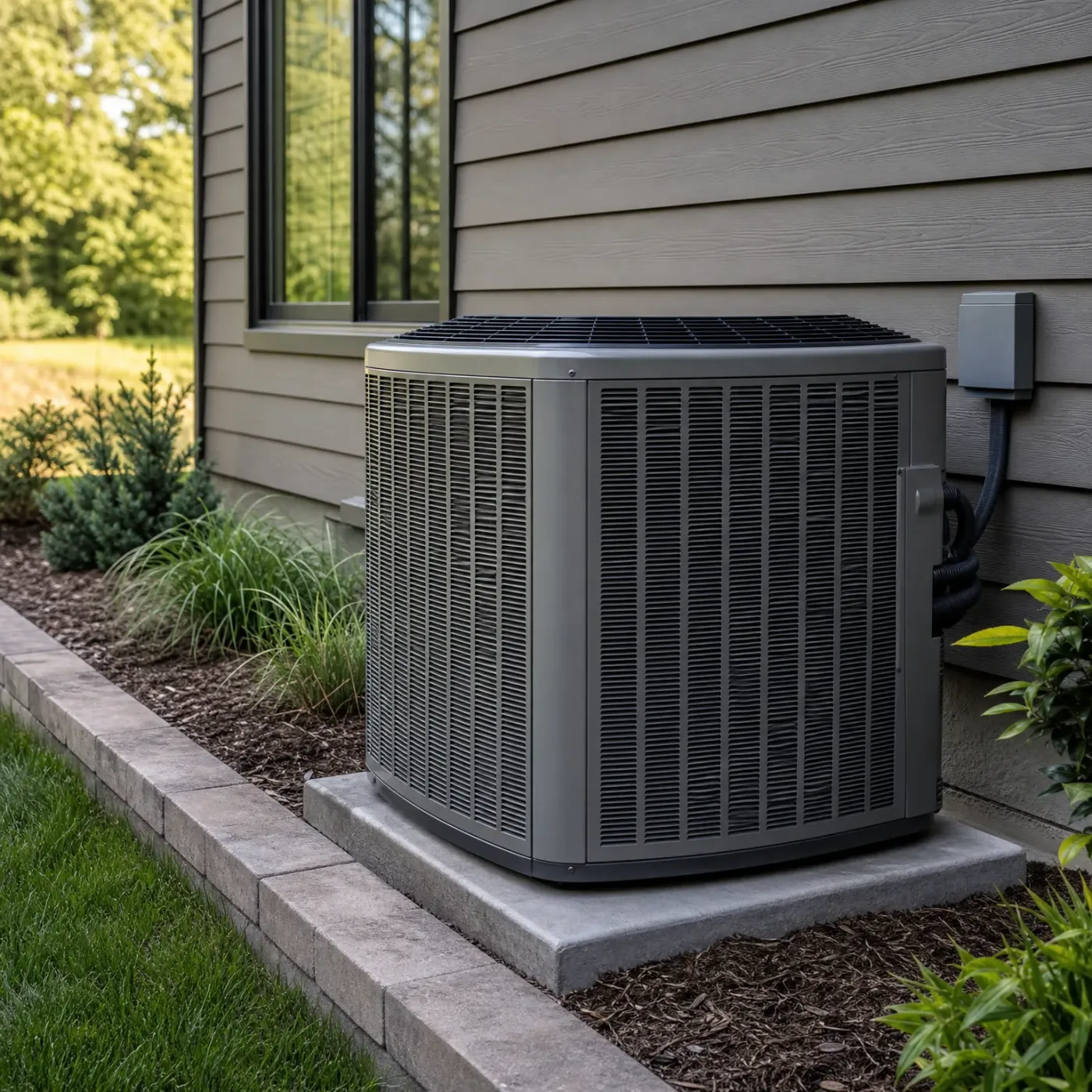
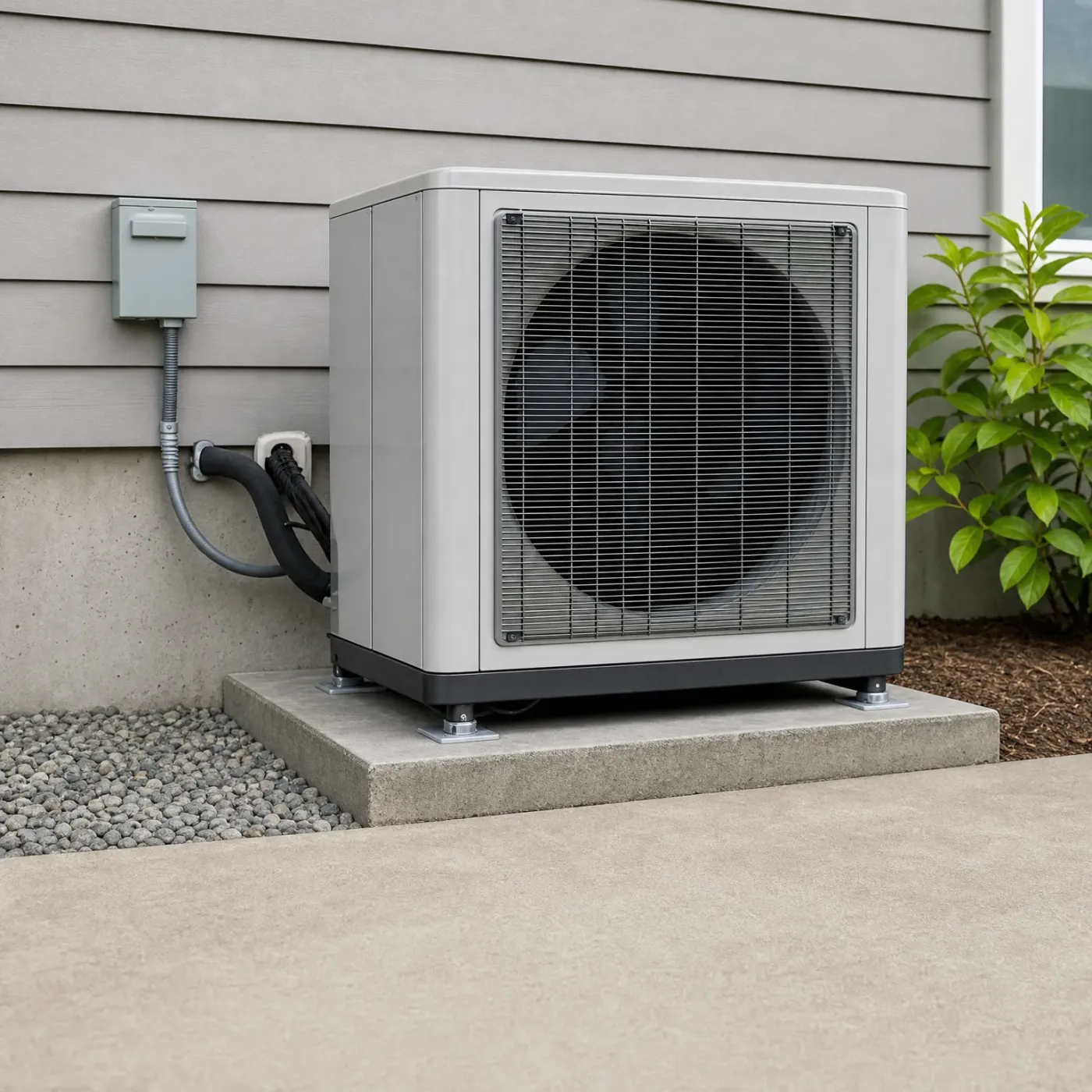
Running the way it should
The cabinet is clean, the pad is clear, and the lines running to the disconnect box are doing their job out of sight. A unit like this cycles through its defrost on its own and keeps pulling heat from the air without you noticing it at all.
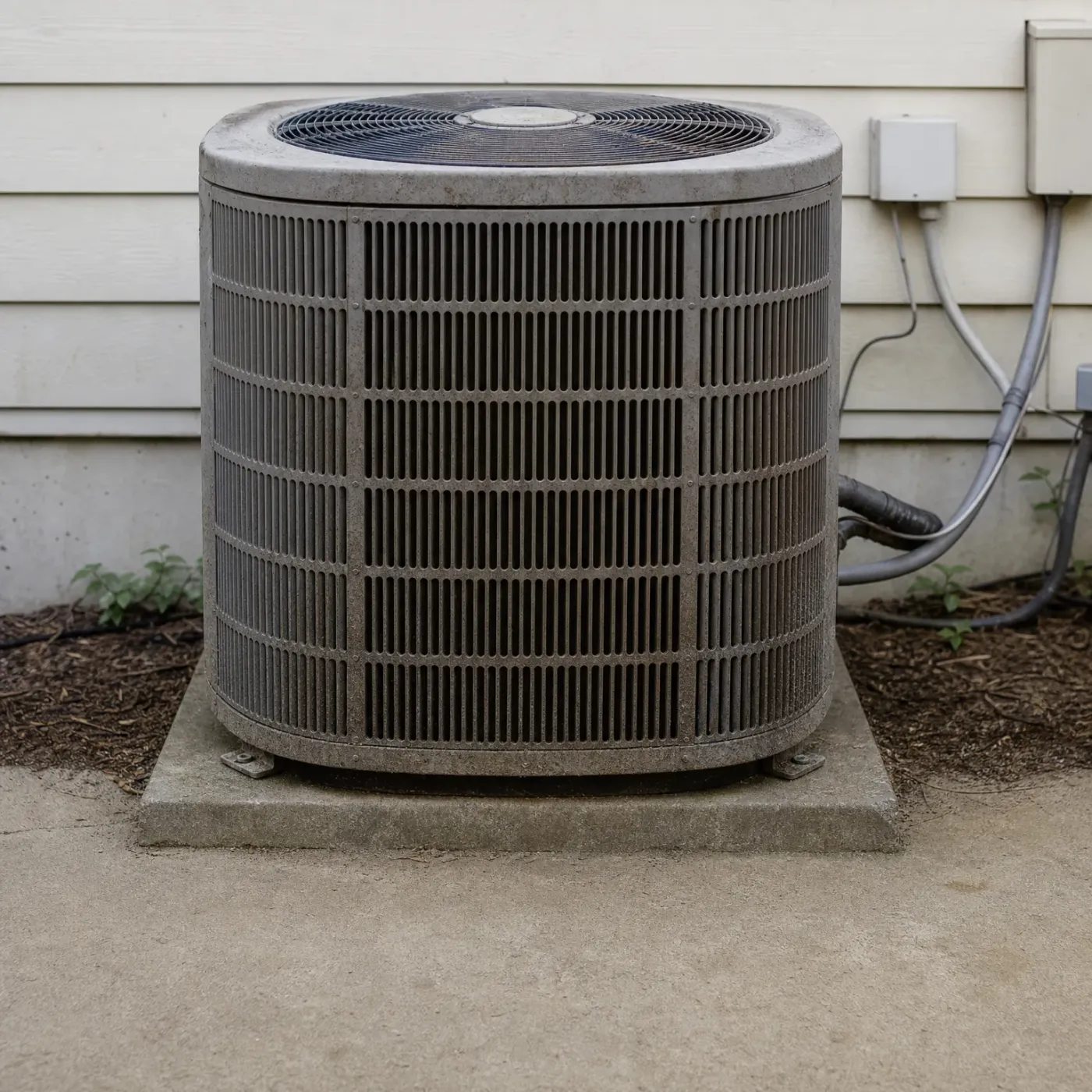
Grime building up with the ice
Dust and grime packed into the cabinet give ice somewhere to grab onto and stay. Once that buildup is sitting on the coils, the unit has to fight through it to defrost, and a call for repair is what gets it back to the first picture.
How a heat pump actually gets rid of that ice
A heat pump runs a defrost cycle on its own. It briefly reverses, pushing hot refrigerant through the outdoor coil to melt whatever frost built up, then switches back to heating. The outdoor fan stops during this, and for a few minutes you might see steam coming off the unit. That's the system working correctly. A control board times this based on temperature and how long the unit has run, usually kicking in every ninety minutes or so during a stretch of cold weather.
If the defrost sensor fails, or the reversing valve sticks, or the board stops reading the coil temperature right, that cycle never starts. Ice keeps building with nothing to stop it. Once you're at that point, you're looking at a repair, not a setting to adjust. Finding someone who works on heat pumps in Minnesota winters, rather than just central air, narrows the search. A technician who knows these systems checks the defrost board, the sensor, and the valve in one visit instead of you calling around describing the ice to three different companies before one of them can tell you which part it is.
It's eleven at night in January, nine below outside, and the baseboard air coming out of the vent in your bedroom feels cool instead of warm. You get up to check the thermostat, see it's running, and pull on a sweatshirt before you go back to bed. Through the window you can make out the shape of the outdoor unit against the snow, a block of ice where the cabinet should be, no fan moving. The furnace closet is quiet. You lie there under another blanket, listening for the unit to kick on and do something, and it doesn't.
Power costs 15.83 cents per kilowatt-hour statewide
At 15.83 cents a kilowatt-hour, a heat pump stuck in defrost or icing over costs you more just by running longer for less heat. A unit fighting ice draws power without putting warmth into the house, so that number climbs on your bill before you ever see the coils underneath.
EIA-861 2025 statewide residential average
1
The thermostat calls for defrost when coil sensors read a frost buildup.
2
A reversing valve switches and sends hot refrigerant outside instead of in.
3
The outdoor fan shuts off while the coil heats up and sheds ice.
4
Melted frost drains off the coil and off the cabinet base.
A thin coat of frost is normal. Ice that keeps coming back every few hours, coils you can't see, a fan that's struggling or stopped, a defrost cycle that runs and runs without clearing anything, those are signs the unit needs a repair, not another cold snap to wait out. You've already seen what's happening out there, and you know by now whether what you're looking at matches the normal kind of frost or the kind that means something inside the unit isn't working right. Either way, you shouldn't have to spend tonight searching through contractors, calling a few, explaining the ice and the fan and the weak heat to each one, then sitting with quotes trying to figure out who actually knows heat pumps in cold weather and who's guessing. Send this one and that part of it is off your plate. Someone qualified gets the details you already worked out here, and you're not the one tracking down who can come look at it.
Hand off the search today
Fill out one short form instead of calling around.