

Running the way it should
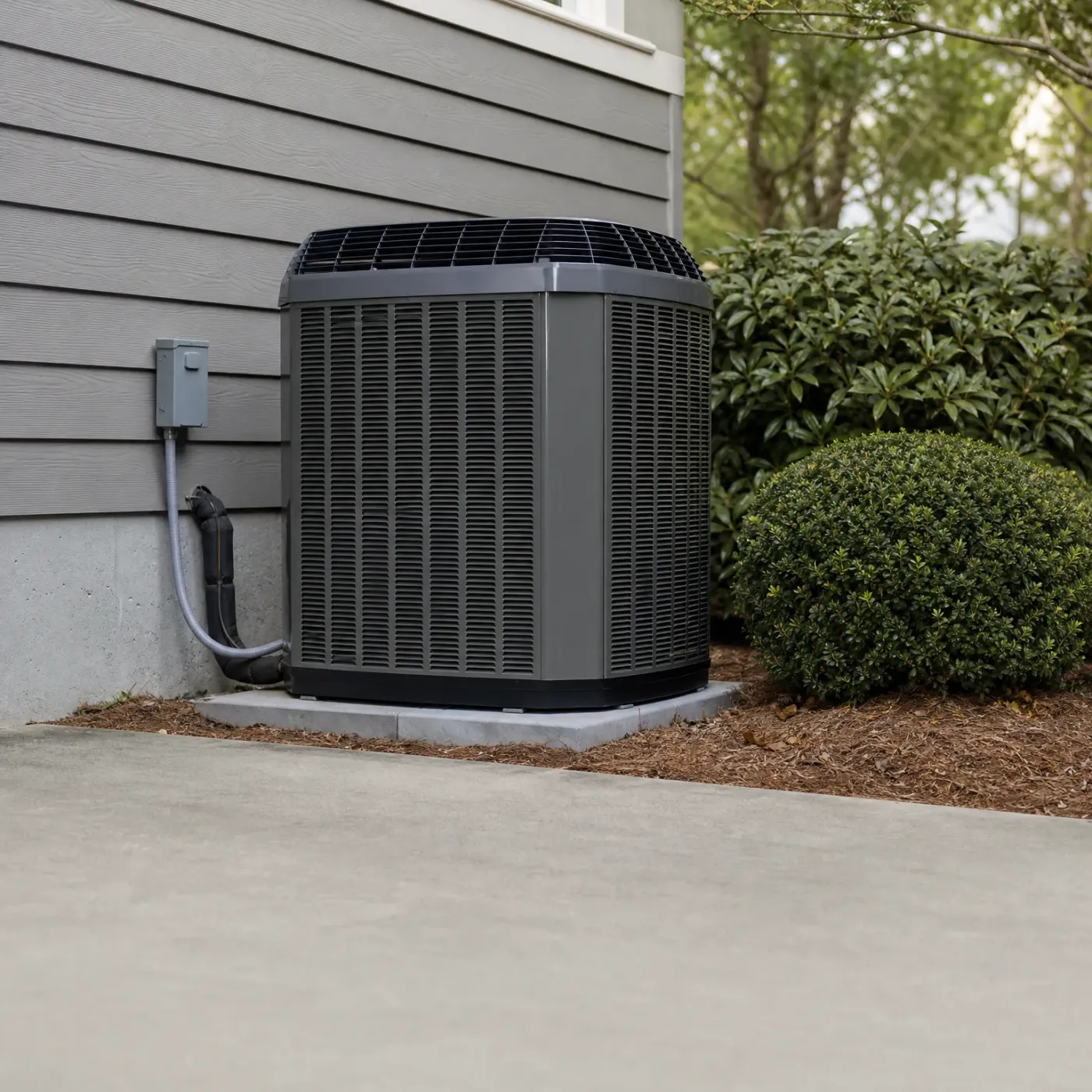
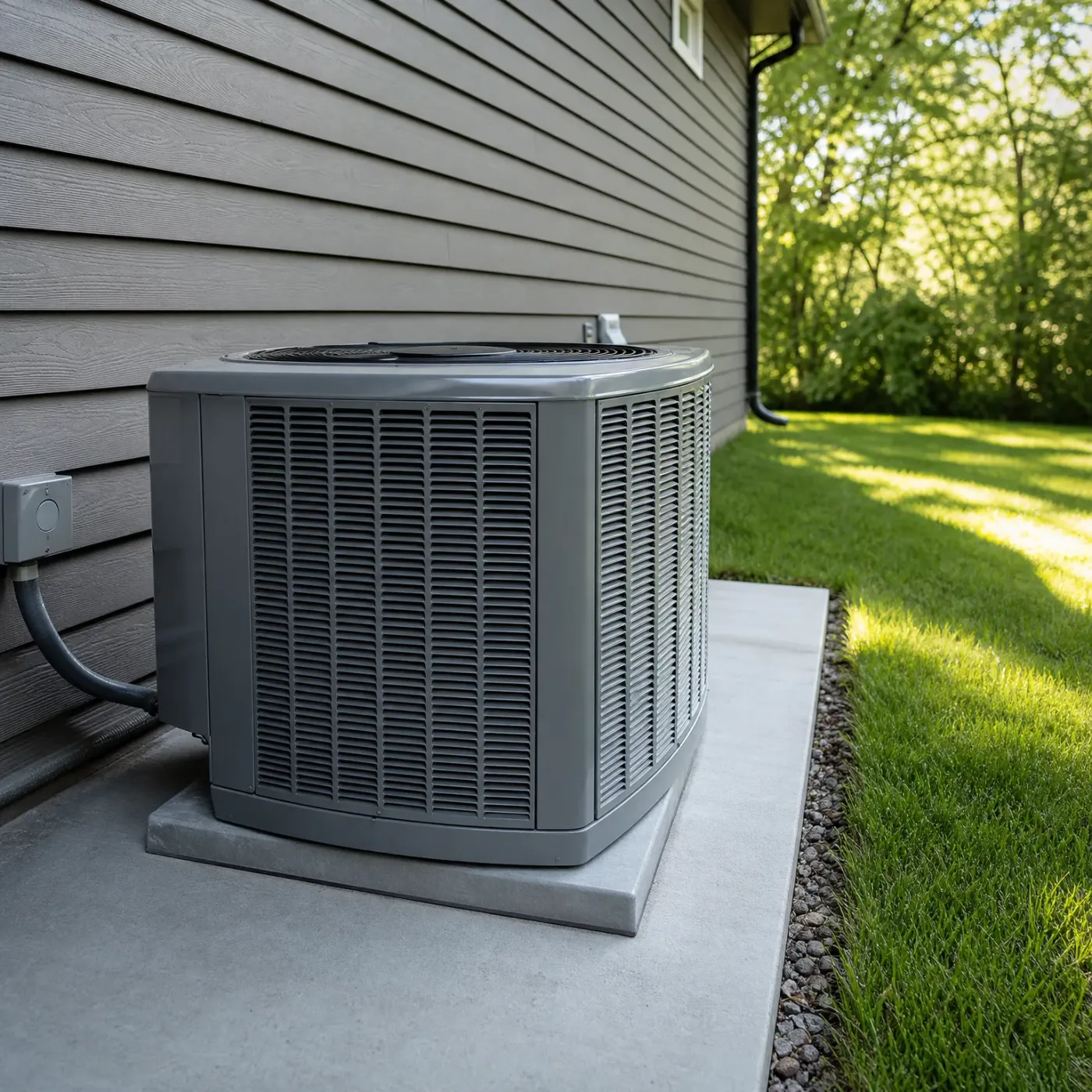
The fan turns the moment the thermostat calls for heat. No ice on the coil, no frost at the base, just a clean unit on its pad doing what it's built to do in the cold.

A heat pump that won't turn on in winter is usually stuck on a lockout, not actually broken. When the outdoor coil ices up faster than the defrost cycle can clear it, which happens during a deep cold snap, the control board shuts the unit down to protect the compressor. Some systems also lock out below a set outdoor temperature and hand heating over to a backup source entirely, so the pump sitting silent on a zero-degree morning can be doing exactly what it was built to do. Other times it's simpler: a tripped breaker, a thermostat set wrong for the cold, or a safety switch that sensed something off and cut power on purpose. A unit that stays off once the air warms back up points to the first case. One that stays off no matter what points to a stuck switch, a control board fault, or low refrigerant, and that needs a contractor to look at it before the next cold stretch finds it off again.

You're up at midnight checking on the bedroom because it doesn't feel right. The sheets are damp against your arm and the window's fogged along the edges even though it's barely seventy outside. You go to the hallway thermostat and bump it, waiting for the air to kick on. Nothing. You press your palm to the vent and feel no movement at all, just warm, still air sitting in the room the way it's been sitting for an hour. Outside, the unit is quiet. No hum, no click, nothing. You stand there in the hallway in the dark, phone in hand, deciding whether this is a tonight problem or a tomorrow problem.
Outdoor coil ices faster than the defrost cycle clears it
Sensors read the ice buildup and trip a safety lockout
Control board shuts the compressor down to prevent damage
Thermostat stays lit but the unit won't answer the call for heat
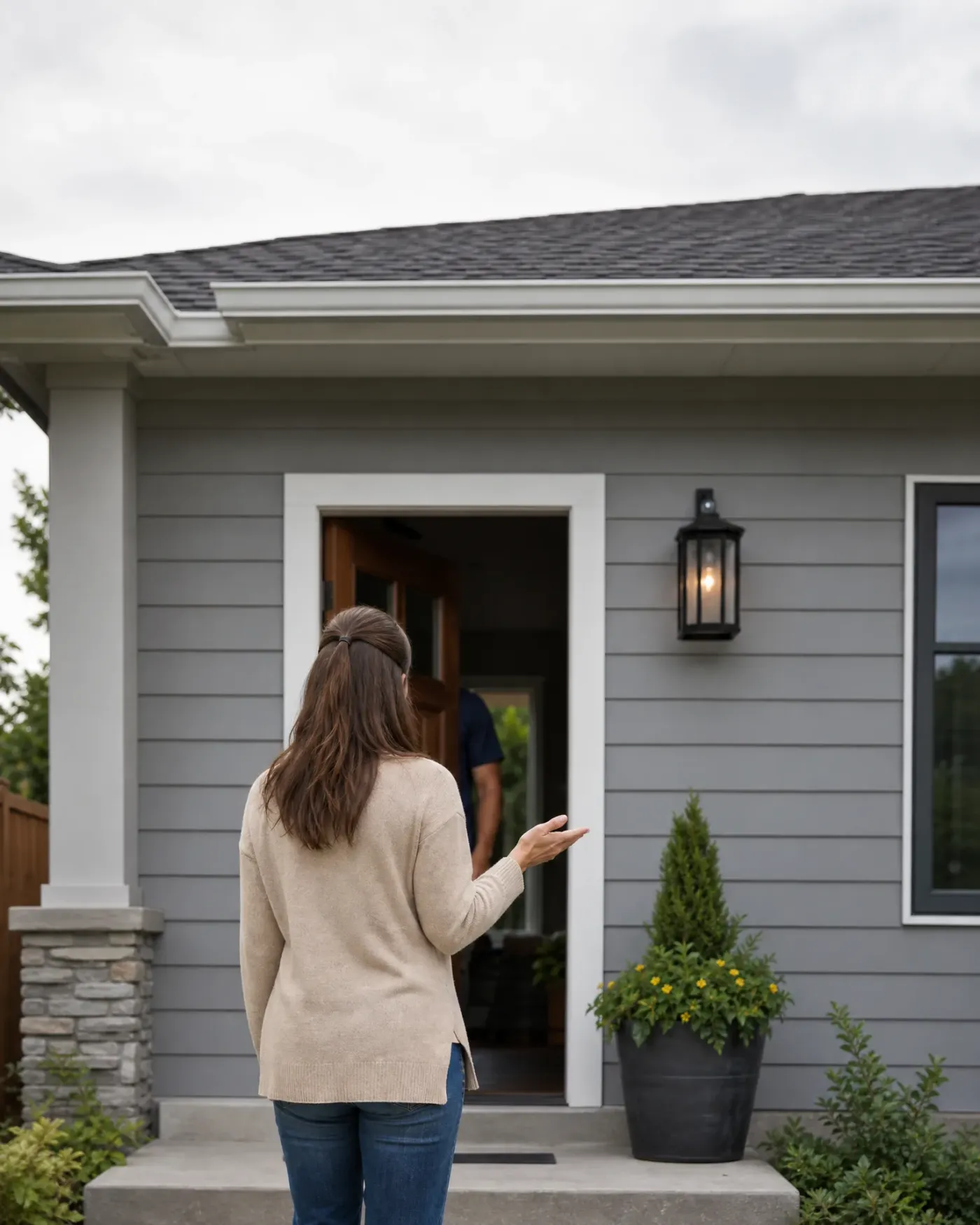
While your heat pump sits locked out, your gas furnace is likely carrying the load alone, and it will keep doing that until the outdoor unit resets or someone clears whatever tripped it. That's not a disaster in a Minnesota winter since most homes here have that backup already built in. But a heat pump that locks out once in a cold snap tends to do it again the next one, and each cycle is the system trying to tell you the defrost cycle isn't keeping up anymore.
If you'd rather not spend the rest of the winter walking out to check the coil every time the temperature drops, the next step is getting a contractor who works on heat pumps in this climate to look at why it's tripping. Once you send the request, you're not the one tracking down who's available and who knows heat pumps versus standard AC. That part gets handed off, and someone who matches your situation reaches out to you.





Send the request and finding a pro stops being your problem.
Asking costs nothing, and the choice to hire stays yours.
A heat pump pulls heat out of outdoor air even when that air is well below freezing, and the colder it gets, the harder the unit works to pull out what little heat is there. During a stretch in the single digits or below, frost forms on the outdoor coil faster than the normal defrost cycle can melt it off. The control board is watching for exactly that. Once ice builds past what a defrost run can clear, it cuts power to the compressor rather than let the coil ice over completely. That's a longer, harder test for the equipment than a mild winter climate would ever put it through.
Some lockouts clear on their own once the coil defrosts and the board sees normal readings again, which can take a few hours. Others don't, because something kept the frost from clearing in the first place, like a fan motor running slow or a defrost sensor giving the board bad information. If the outdoor unit still won't answer the thermostat after it's had time to thaw out, the lockout isn't resetting by itself. At that point the gas furnace is carrying the whole house, which it can do, but it's worth getting the heat pump looked at before the next cold snap tests it again.
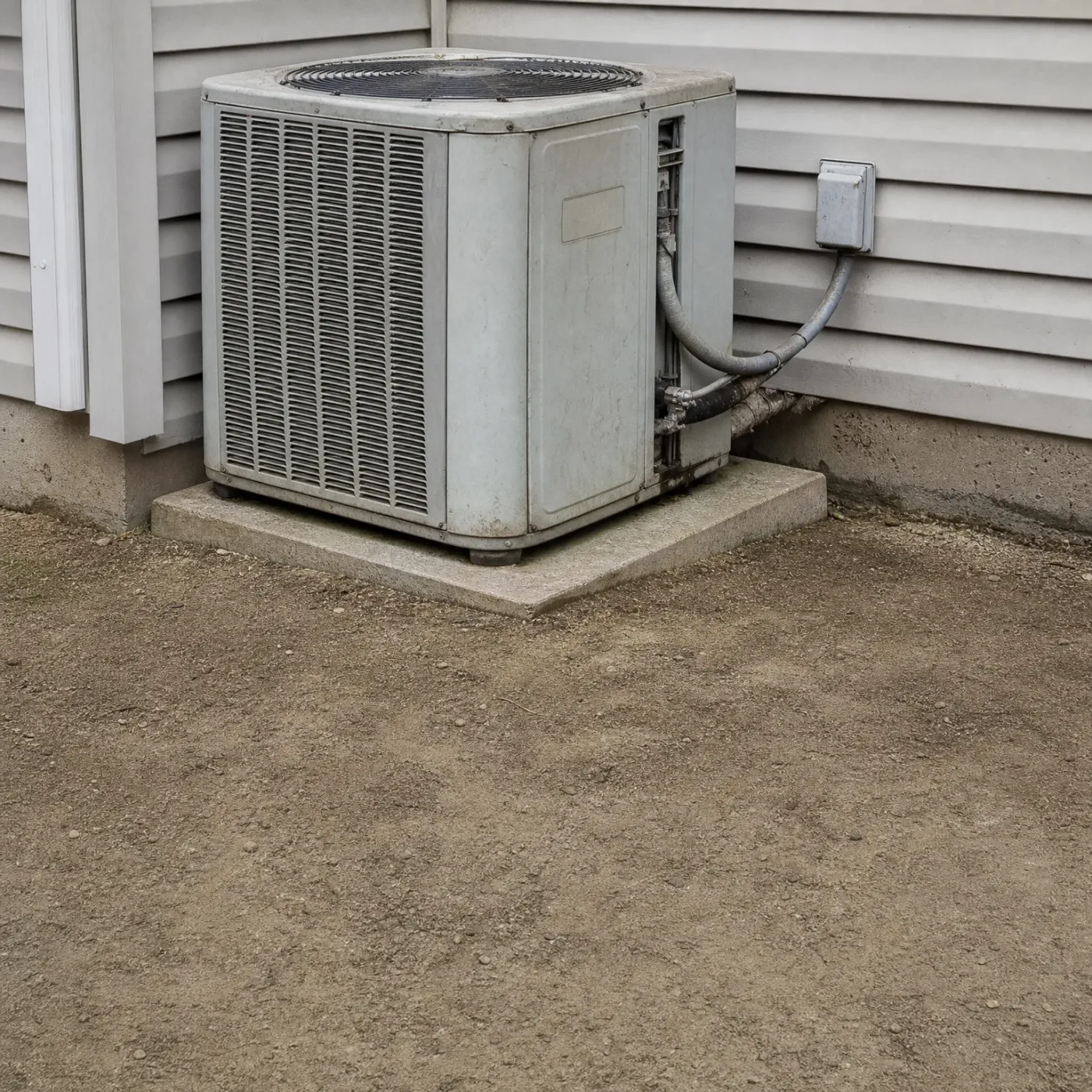
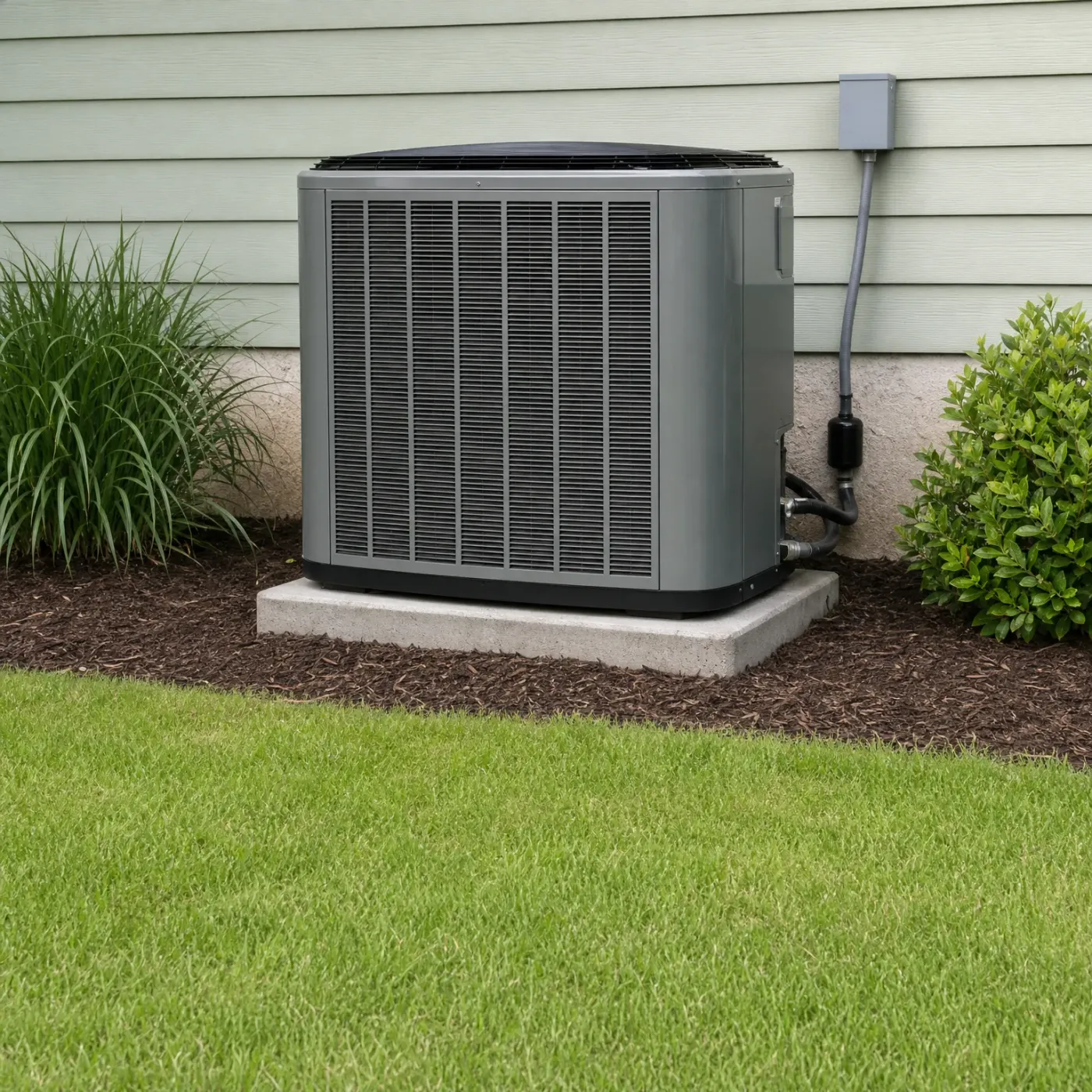
You wait it out, figuring the heat pump will reset on its own once the weather breaks and the ice has a chance to melt off the coil.
Your furnace carries the house that whole time, your bill reflects that, and the lockout may not clear on its own if something besides ice is holding it there.
With your heat pump locked out, your gas furnace is covering the heat, so the power bill isn't where you'll feel it. At 15.83 cents a kilowatt-hour, the real cost is a furnace running longer than it should while the outdoor unit sits idle.
EIA-861 2025 statewide residential average
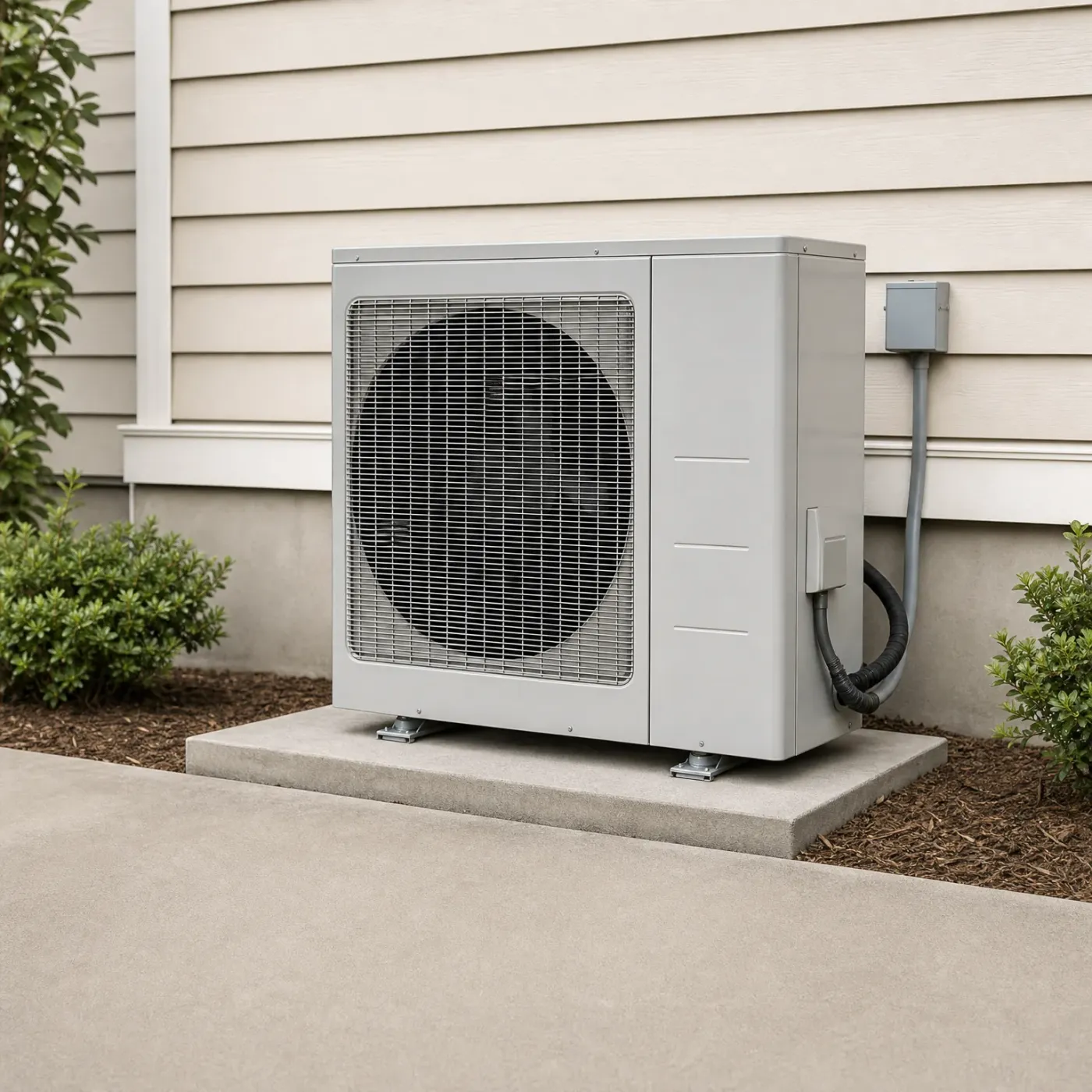
The fan turns the moment the thermostat calls for heat. No ice on the coil, no frost at the base, just a clean unit on its pad doing what it's built to do in the cold.
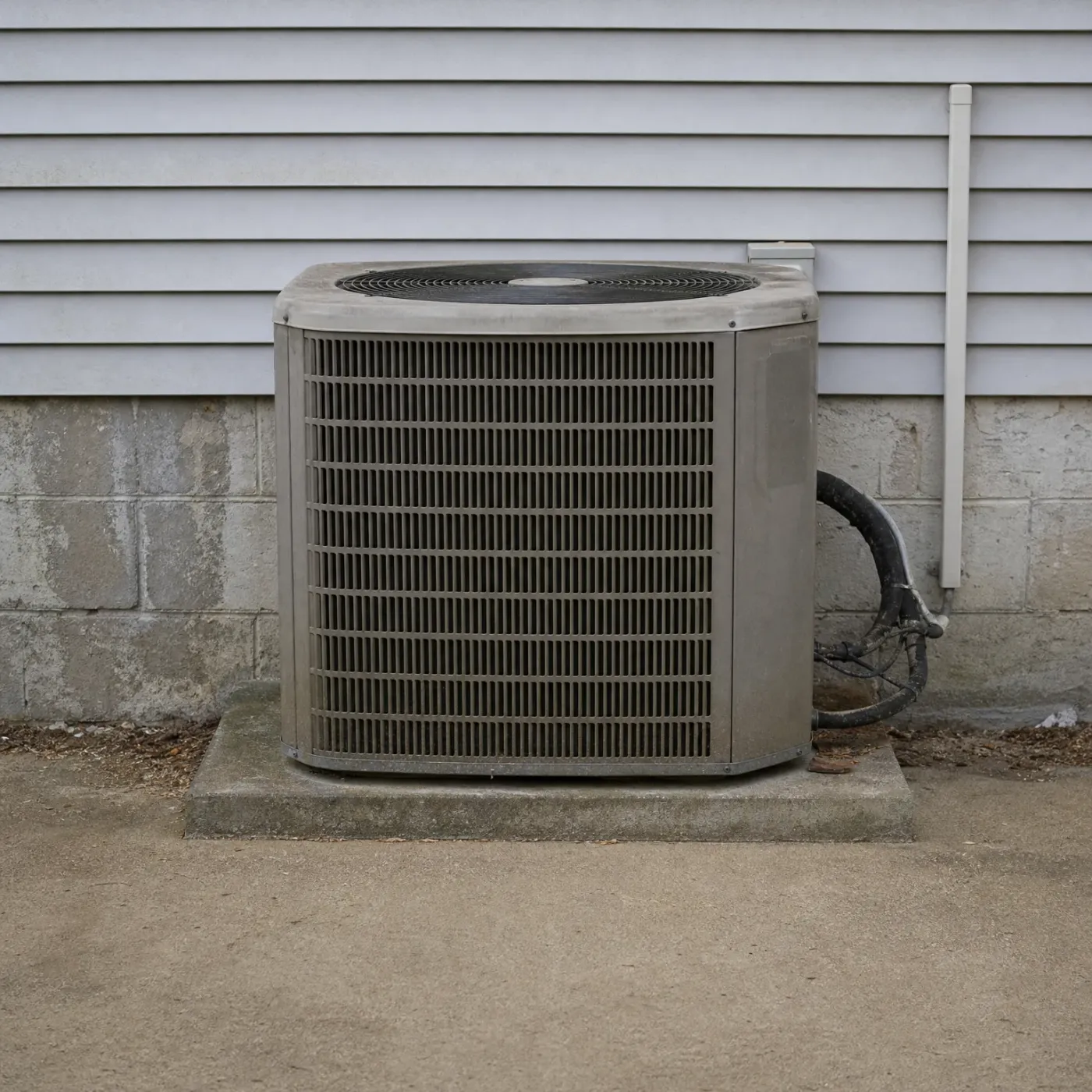
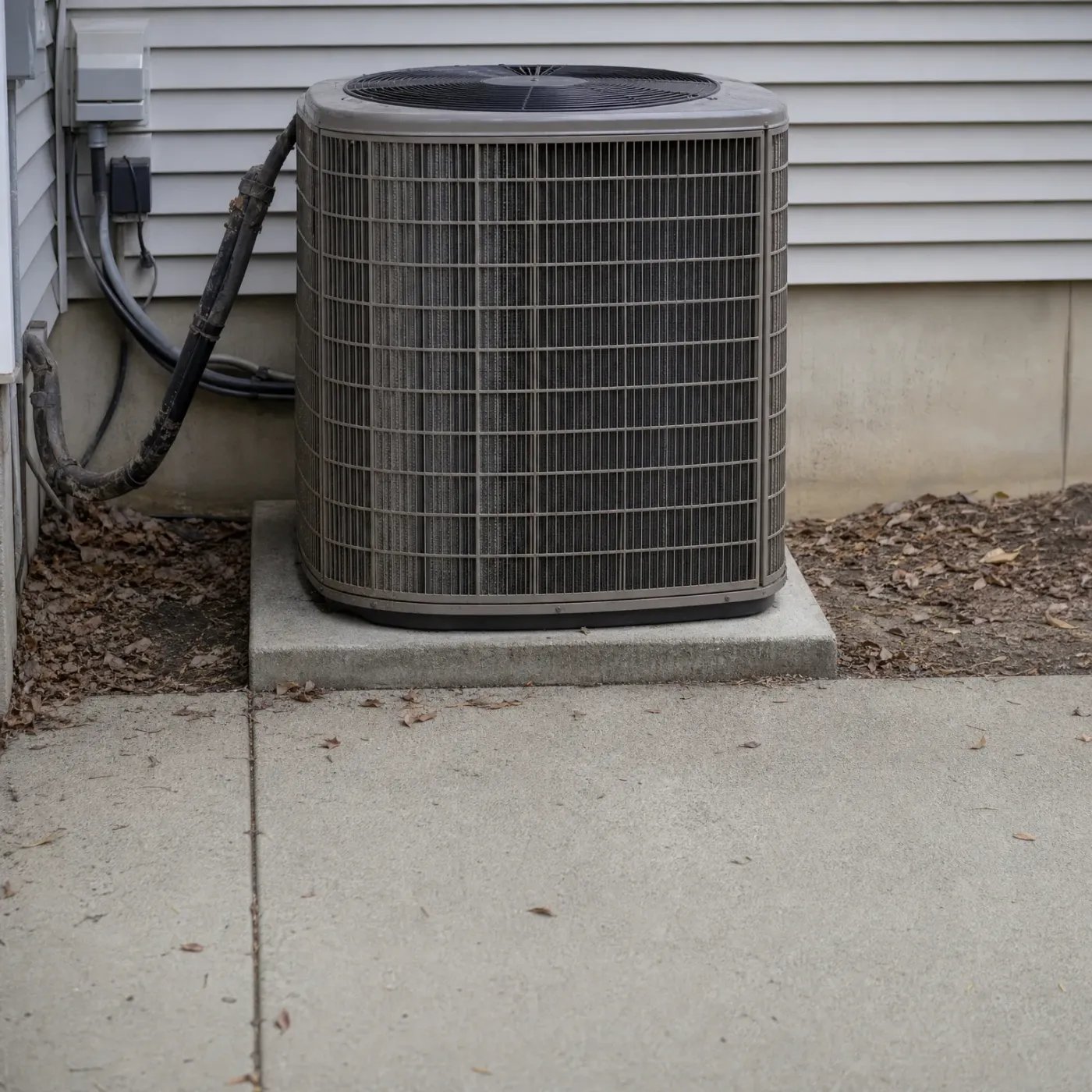
Years against the weather wear on a unit. Lines along the foundation, siding showing its age above, a cabinet that's seen enough winters to start losing the fight before the next cold snap even hits.
You've checked the thermostat and it responds fine, lights up, lets you bump the temperature, but nothing outside changes. No fan noise, no hum, nothing. It's confusing because the thermostat looks like proof the system has power, so you start wondering if the problem is actually in the wiring between the thermostat and the unit instead of outside.
Your thermostat runs on low-voltage wiring that's almost always separate from what powers the compressor outside. That's why it stays lit and responsive even when the outdoor unit is locked out. The thermostat sends the call for heat, but the control board on the heat pump is the one that decides whether to answer it. When ice on the coil trips the safety lockout, the board ignores that call on purpose. It's not a wiring fault and not a dead breaker. The thermostat working normally is actually a useful sign, since it tells you the problem is isolated to the outdoor unit and its defrost control, not the thermostat or the wiring that connects them.
Minnesota summers don't carry the heavy air you'd get further south. Averaged over where people actually live in the state, the dew point sits around 59°F across June, July and August, according to NOAA climate data. For your heat pump, that's an easy season. The outdoor unit isn't fighting moisture-loaded air to move heat, so it's not running as hard or as long as it would somewhere muggier. Winter is a different story for that same unit, and a dry, mild summer doesn't tell you anything about how it'll hold up once the cold sets in and the coil has to deal with ice instead of humidity.
NASA POWER T2MDEW county cells weighted by homes


A heat pump that goes quiet during a cold snap almost always comes down to the same thing. The outdoor coil iced up faster than the defrost cycle could keep up with it, and the control board shut the compressor down rather than let it run that way. That's a lockout, not a failure, and it's the reason the thermostat still lights up and responds while the unit outside does nothing. Check the coil and the base of the unit for ice first. If it was running fine before the cold hit and the breaker still has power, the lockout explains what you're seeing without anything more being wrong.
None of this has left you without heat. Your furnace has been carrying the house the whole time the outdoor unit sat idle, which is why the lockout hasn't meant a cold night, just a furnace doing more of the work than it normally would. That's fine for a while, but it's not something to leave alone indefinitely. The lockout can hold past the point where the weather breaks, and ice at the base or along the coil isn't guaranteed to clear on its own.
Getting someone to look at it stops this from being a guessing game at midnight with a flashlight. Once you send the form, finding the right contractor for a Minnesota heat pump in winter becomes their job, not yours. You've already done the part that matters, which is noticing it wasn't right and checking what you could see. The rest is a phone call away from being someone else's problem to solve.
After this form, you can stop searching for a heat pump pro.
No fee to send it, and nothing to sign.