Tell us about the job
Takes about a minute. No obligation.
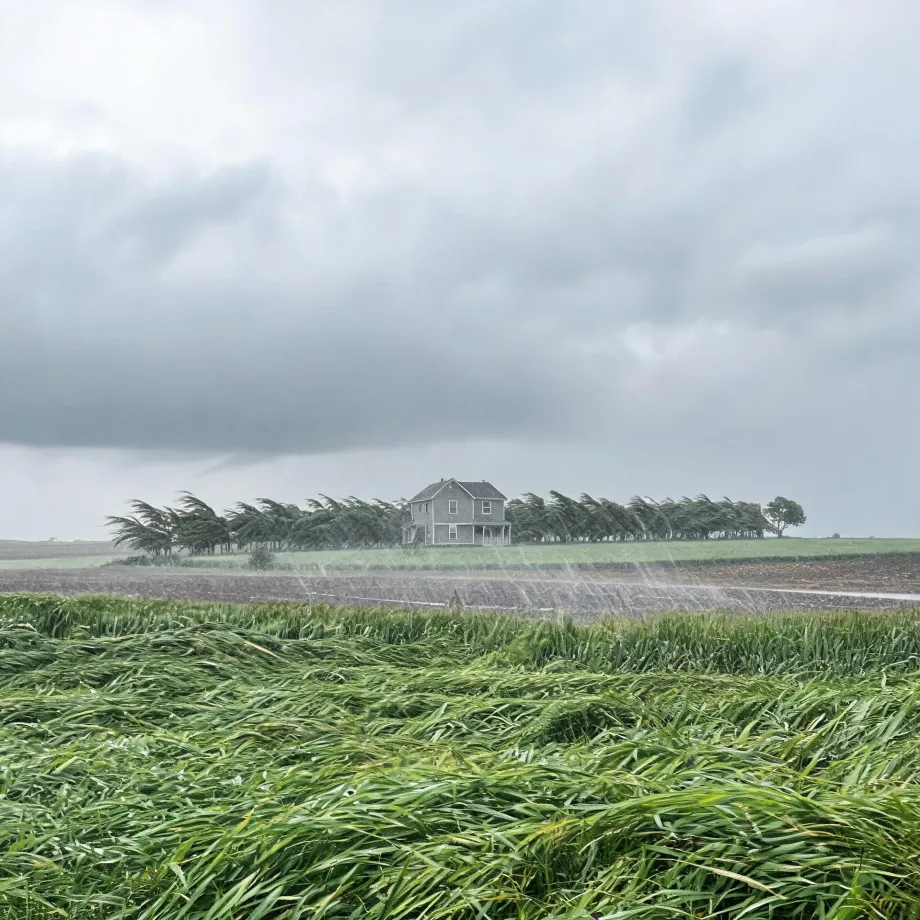
A contractor quoting a heat pump repair in Isanti County has to work out what actually drove the failure before settling on a scope of work. 61 severe weather events were recorded in Isanti County, Minnesota between 2015 and 2024. At that rate, severe weather is something a system here encounters now and then, not a grinding background condition. A refrigerant leak, a failing capacitor, or a worn contactor is far more likely to trace back to the age of the equipment or how well it has been serviced than to weather exposure. A contractor who skips that history and quotes straight from the symptom risks replacing parts that will fail again for the same reason.
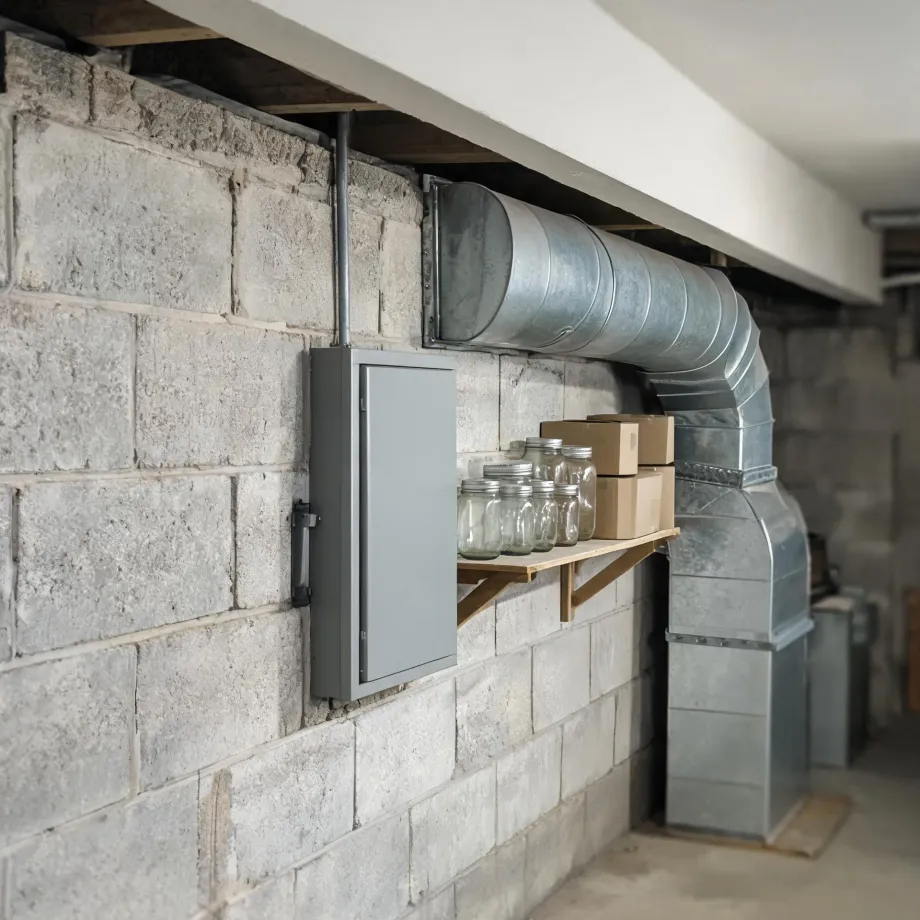
Parts availability is the quiet decision point in a heat pump repair here. Half the homes in Isanti County, Minnesota were built in 1988 or earlier (2020-2024 ACS 5-year). A system running in a house that age has usually been replaced at least once since original construction, which puts the current equipment well into the portion of its service life where manufacturers reduce parts production. When a contractor opens the unit, the question is whether the failed component, a control board, a reversing valve, a specific refrigerant circuit part, still ships from a supplier in a reasonable window. If it does, the repair proceeds. If the lead time stretches or the part is discontinued, the scope of the job changes before any labor estimate is written.
The Parts of a Heat Pump a Contractor Checks First
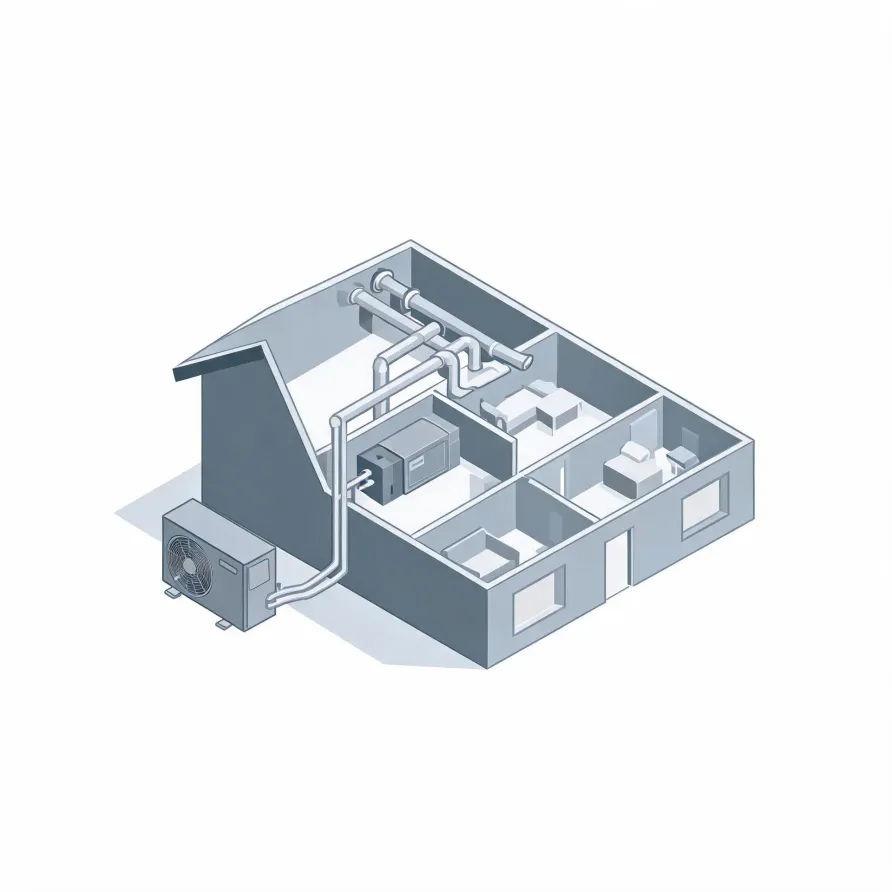
The outdoor unit sits outside the house and holds the compressor and the condenser coil. The compressor is where most mechanical failures start, so a contractor listens to it, checks its pressures, and looks for signs it is working harder than it should. The condenser coil wraps around it and sheds heat to the outside air.
Inside the house, the air handler contains the evaporator coil and the blower fan, and these are the pieces a contractor reaches when the problem is weak airflow or poor heating inside a room. The refrigerant lines run between the two units and carry the working fluid; a leak anywhere along them shows up as a pressure drop that a contractor traces back to its source. The reversing valve, which sits in the outdoor unit, is what lets the system heat in winter and cool in summer, and a stuck or failing valve is a repair with its own set of signs.
The drawing shows the general layout of a heat pump system, and a licensed contractor determines which parts and conditions apply to the specific installation in your house.
Get matched in Isanti CountyIsanti County, by the numbers
61 severe weather events were recorded in Isanti County, Minnesota between 2015 and 2024.
NOAA National Centers for Environmental Information, Storm Events Database, bulk CSV export, events 2015-01-01 through 2024-12-31.Half the homes in Isanti County, Minnesota were built in 1988 or earlier (2020-2024 ACS 5-year).
U.S. Census Bureau, 2020-2024 American Community Survey 5-Year EstimatesIsanti County, Minnesota holds 17,268 housing units (2020-2024 ACS 5-year).
U.S. Census Bureau, 2020-2024 American Community Survey 5-Year EstimatesOwners occupy 83.7% of the occupied homes in Isanti County, Minnesota (2020-2024 ACS 5-year).
U.S. Census Bureau, 2020-2024 American Community Survey 5-Year EstimatesCodes & Standards Governing Heat Pump Repair in Isanti County, Minnesota2 sourced rules and standards
Licensing and Legal Requirements in Isanti County, Minnesota
Minnesota defines a mechanical contractor as a business that installs, repairs or maintains heating, ventilating, cooling or refrigeration systems — the definition that carries the exemption from the residential contractor licence.
Minnesota's residential contractor licence does not reach HVAC work: the licensing section carries its own exemption list, and a mechanical contractor is exempt from the licence requirement by name.
Severe Weather Events in Isanti County
Extreme weather puts a steady load on heat pumps, and that load accumulates over years of hard winters and rough summers. How much stress local equipment absorbs is a local question, and the record below reflects what the climate in this area has actually delivered.
61 severe weather events, 2015–2024. Source: NOAA National Centers for Environmental Information, Storm Events Database.