Tell us about the job
Takes about a minute. No obligation.
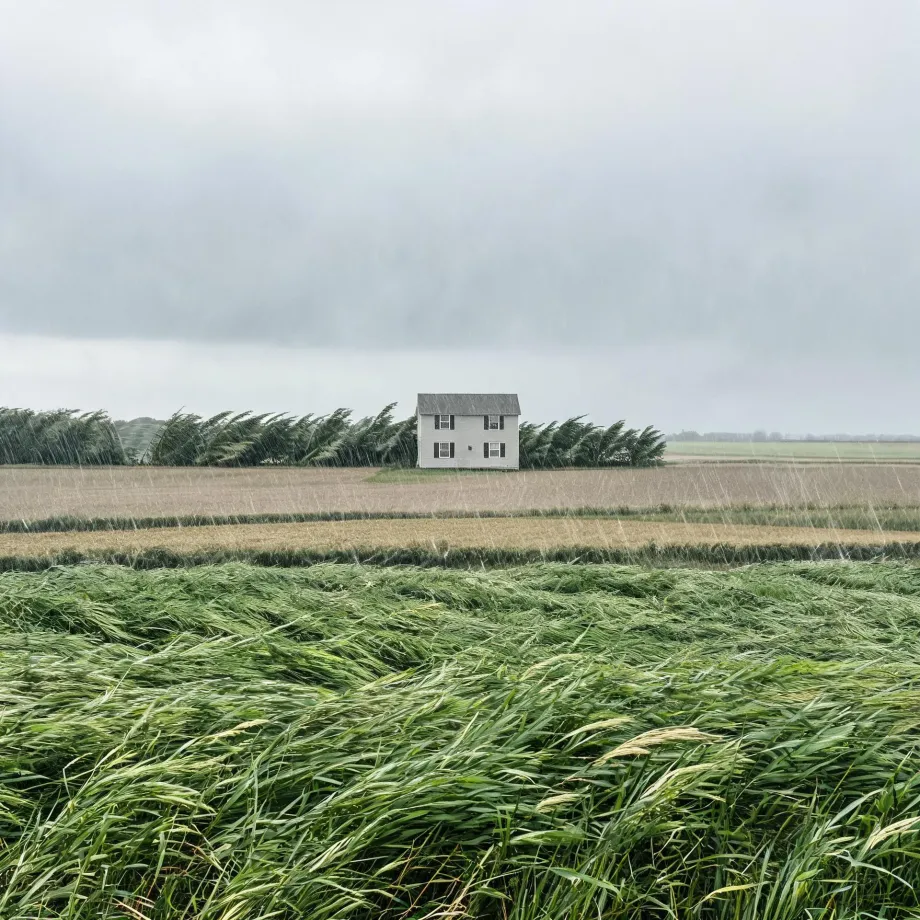
A heat pump repair in Sherburne County starts with a question a contractor has to settle before pricing anything: which parts wore out under load, and which ones simply ran out of years. 104 severe weather events were recorded in Sherburne County, Minnesota between 2015 and 2024. At that rate, compressors, reversing valves, and capacitors in this area have been working against real weather stress across their service lives, and that stress shows up as specific failure patterns a contractor checks before assuming a straightforward fix. A system that has run through that kind of weather may need a different scope of repair than one that failed in a calmer operating environment.
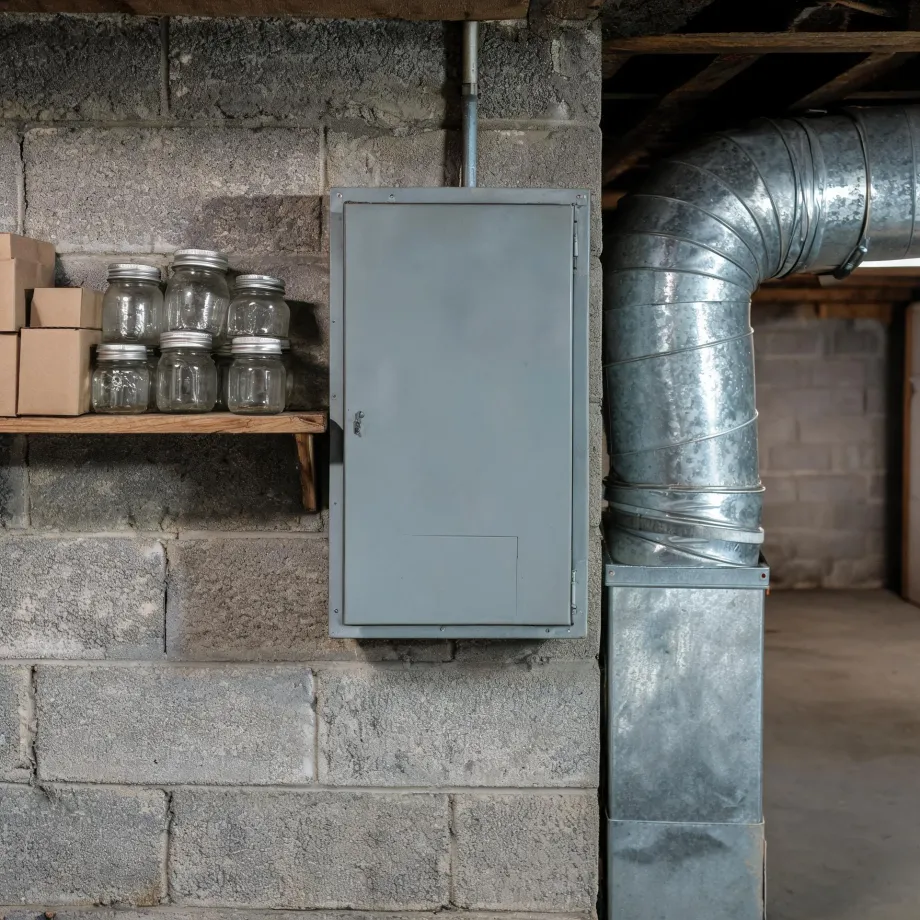
Refrigerant circuits and compressors age on their own schedule, and in stock this old the repair question is whether parts for the system a previous owner installed are still in supply. Half the homes in Sherburne County, Minnesota were built in 1996 or earlier (2020-2024 ACS 5-year). That gap between the build date and whatever equipment came later means the house itself is rarely the constraint a contractor runs into. What decides the scope and the bill is what the opened unit turns out to contain and whether a distributor still stocks what it takes.
The Parts of a Heat Pump a Contractor Checks First
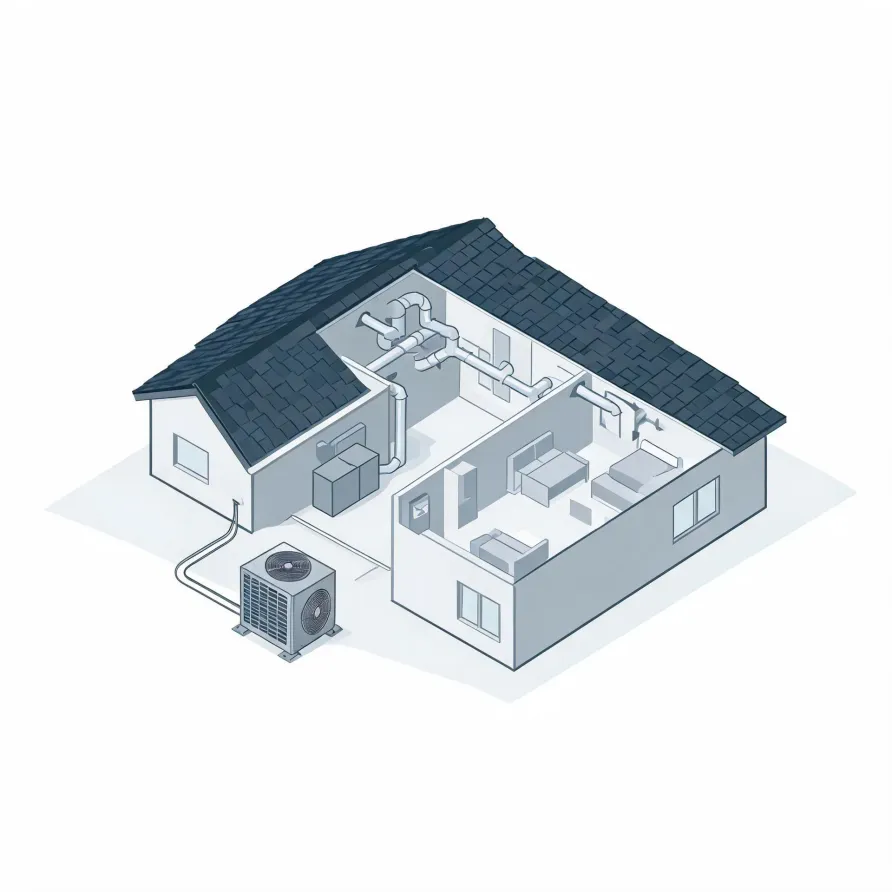
The outdoor unit is what most homeowners see first, a cabinet sitting on a pad beside the house that holds the compressor and the outdoor coil. The compressor is the part that does the hardest mechanical work, and when a heat pump stops heating or cooling altogether, that cabinet is where a contractor starts. The outdoor coil, wrapped around the inside of that cabinet, is a common source of trouble when the system runs but does not perform.
Inside the house, the air handler moves conditioned air through the home and holds the indoor coil, the blower motor, and the expansion valve, each of which can be the source of a different kind of failure. The refrigerant lines that connect the two units and the reversing valve that switches the system between heating and cooling are also pieces a contractor examines when the fault is not obvious from the outside.
The drawing shows a typical heat pump layout, and a licensed contractor determines which components apply and what condition they are in for your specific home.
Get matched in Sherburne CountySherburne County, by the numbers
104 severe weather events were recorded in Sherburne County, Minnesota between 2015 and 2024.
NOAA National Centers for Environmental Information, Storm Events Database, bulk CSV export, events 2015-01-01 through 2024-12-31.Half the homes in Sherburne County, Minnesota were built in 1996 or earlier (2020-2024 ACS 5-year).
U.S. Census Bureau, 2020-2024 American Community Survey 5-Year EstimatesSherburne County, Minnesota holds 37,099 housing units (2020-2024 ACS 5-year).
U.S. Census Bureau, 2020-2024 American Community Survey 5-Year EstimatesOwners occupy 83.2% of the occupied homes in Sherburne County, Minnesota (2020-2024 ACS 5-year).
U.S. Census Bureau, 2020-2024 American Community Survey 5-Year EstimatesCodes & Standards Behind Heat Pump Repair in Sherburne County, Minnesota2 sourced rules & standards
Licensing Rules for HVAC Repair in Sherburne County, Minnesota
Minnesota defines a mechanical contractor as a business that installs, repairs or maintains heating, ventilating, cooling or refrigeration systems — the definition that carries the exemption from the residential contractor licence.
Minnesota's residential contractor licence does not reach HVAC work: the licensing section carries its own exemption list, and a mechanical contractor is exempt from the licence requirement by name.
Severe Weather Events in Sherburne County, Year by Year
Extreme weather puts heat pumps under stress, and the loads a system carries through a hard season show up later as wear, faults, and repair calls. How often that kind of weather hits Sherburne County is part of what shapes the repair picture here.
104 severe weather events, 2015–2024. Source: NOAA National Centers for Environmental Information, Storm Events Database.